Source-Connect 4 Becomes the First Dolby Atmos–Certified Remote Review and Approval Tool With Full Metadata Streaming
By HiFi Editorial16 February 2026
Key Highlights
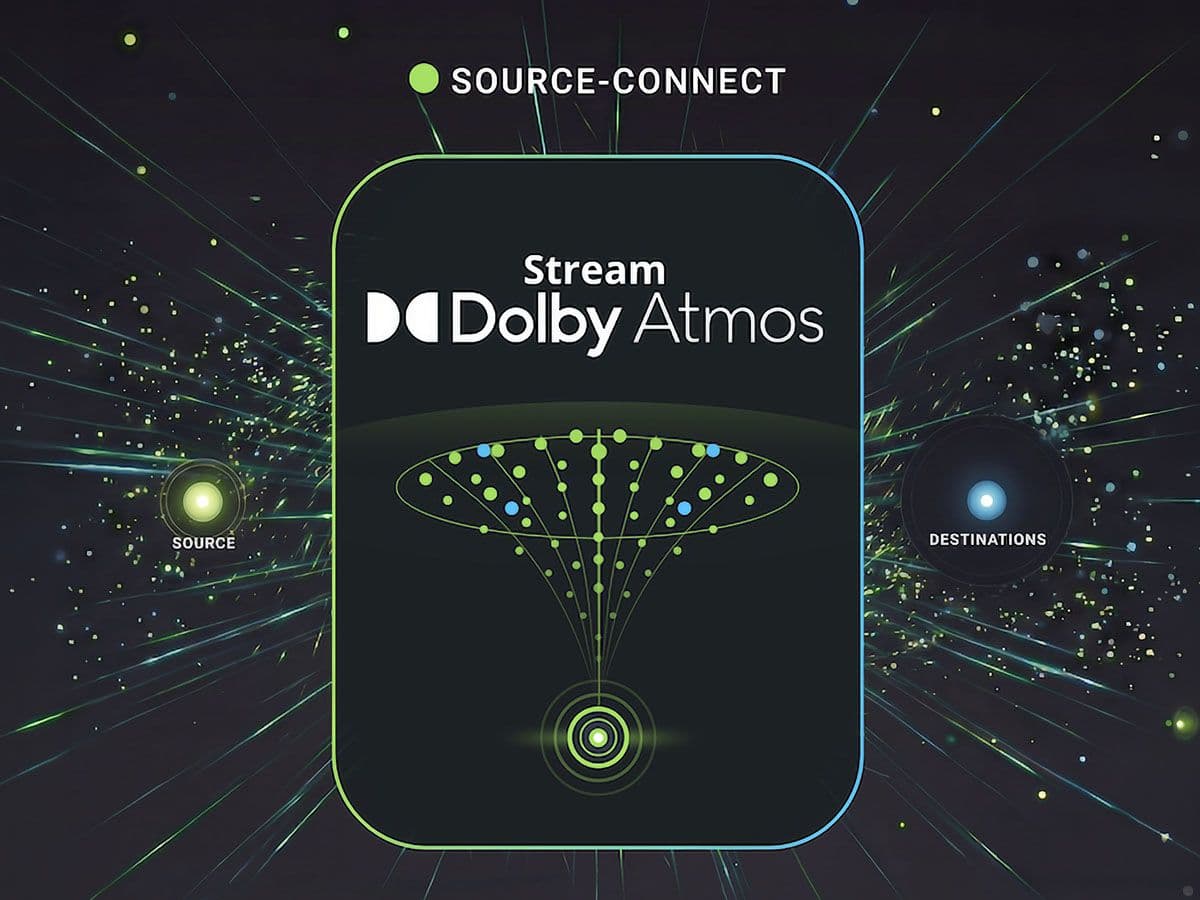
Source-Connect 4 becomes the first Dolby Atmos–certified remote collaboration tool with direct metadata connection to the Dolby Atmos Renderer.
The software supports up to 128 streaming audio channels, handling full Atmos beds, objects, and metadata without re-renders or channel limitations.
Mixers, directors, and stakeholders can remotely attend Dolby Atmos playback and mixing sessions from any location or monitoring setup.
What differentiates Source-Connect 4 in the wider Dolby Atmos ecosystem is not simply bandwidth or channel capacity, but the way it treats an Atmos mix as a data-rich construct rather than flattened audio. Competing remote review solutions typically rely on monitor-specific re-renders or downmixed feeds, which quietly bake monitoring assumptions into the signal path. Here, the Renderer remains authoritative at the receiving end, meaning object trajectories, trim metadata, and bed relationships are interpreted locally according to the actual speaker layout. For engineers used to debating phantom images and object divergence on forums, this distinction matters more than raw channel count—it preserves decision-making all the way to the destination room.
There is also a philosophical split visible in how different stakeholders frame the tool. Source Elements emphasizes protocol-level synchronization and Renderer compliance, speaking to engineers concerned with clocking, transport accuracy, and deterministic playback. Studio voices, by contrast, focus on confidence during approvals: directors and producers hearing the same spatial intent without translation layers. That contrast highlights an important subtext—Atmos review is no longer just about “can it stream,” but whether remote playback remains faithful enough to sign off narrative and emotional beats. The technical underpinnings enable that trust, even if the end users never see the metadata stream itself.
From a systems perspective, the macOS-only requirement and dependency on the standalone Dolby Atmos Renderer suggest this is aimed squarely at professional rooms rather than hybrid prosumer setups. Yet the architecture quietly scales downward: the same metadata-driven stream can be decoded by anything from binaural headphone renderers to large-format theatrical arrays without altering the source session. In practical terms, this collapses the traditional hierarchy between mix stage and review room, allowing spatial decisions to travel intact rather than being approximated. For an industry increasingly balancing immersive ambition with distributed production realities, that shift may prove more consequential than any headline feature.
HiFi Weekly Digest
New gear, best reads, and deals — every Friday.