Get the weekly hi-fi digest — new gear, best reads, and deals.

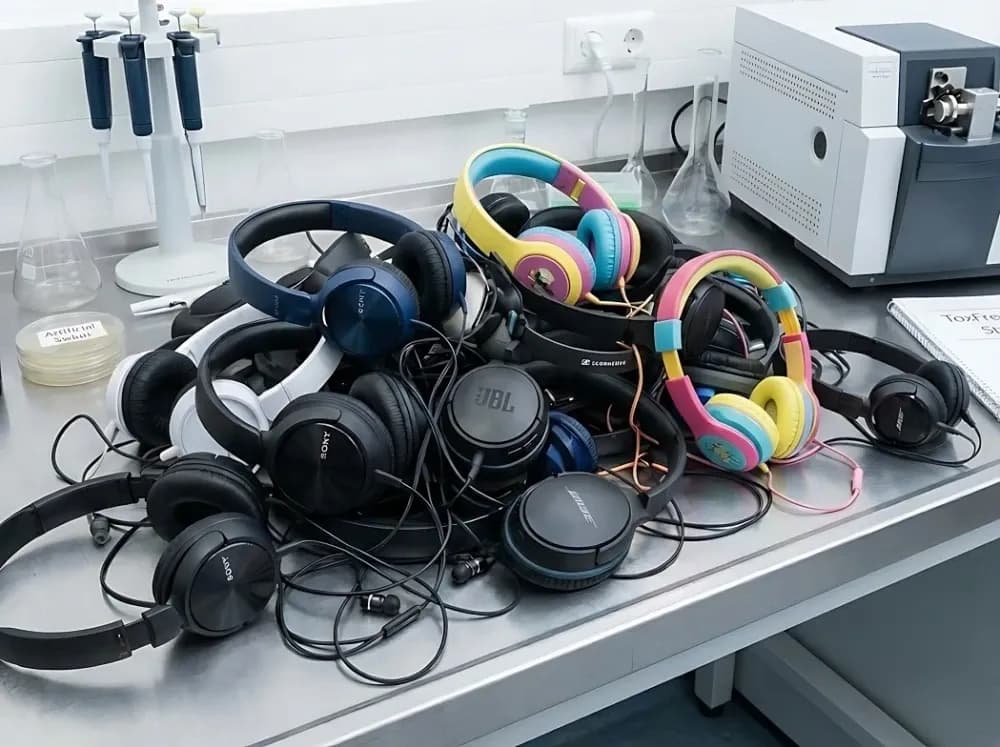
ToxFreeLife tested 81 headphone models from brands including Sony, Apple, JBL, Bose, Samsung, and Temu across European retail and online marketplaces.
Devices were dismantled into 180 hard and soft plastic samples, analyzed using solvent extraction, ultrasonics, and LC-MS/GC-MS laboratory techniques.
Hazardous substances were detected in all models, with bisphenol A found in nearly every sample regardless of price, brand prestige, or market positioning.
What stands out on a closer read is how material engineering choices in modern headphones collide with industrial chemistry norms. Skin‑contact parts—earpads, headbands, cable jackets—lean heavily on soft PVC blends and elastomer foams to achieve comfort, isolation, and long-term flexibility. Those same formulations often rely on legacy additives to keep durometer stable, slow plastic creep, and meet fire‑safety targets in compact housings. From an audiophile perspective, it explains why two models with similar tuning can feel radically different after an hour: the “buttery” compliance many users praise is often the result of aggressive plasticization rather than higher-grade polymers like medical silicones or thermoplastic elastomers.

Another layer is the disconnect between acoustic ambition and materials governance. Premium headphones frequently chase low resonance and structural damping through dense plastics and layered composites, especially in gaming headsets packed with LEDs, batteries, and wireless modules. That complexity increases the bill of materials and, with it, the chemical palette used for flame retardancy and durability. Meanwhile, children’s models—often lighter and more colorful—tend to prioritize softness and cost efficiency, which in industrial practice narrows the choice of compliant polymers even further. Price tags and brand prestige, in this context, say more about driver matching and DSP than about what’s inside the headband foam.
From a regulatory standpoint, the findings highlight a gray zone familiar to anyone following EU REACH updates: many additives remain legal below certain thresholds or within specific use cases, even as manufacturers market products globally with identical materials. Audiophiles debating pad swaps and aftermarket cables may want to broaden that conversation to material transparency, not as a panic reaction but as a push for better spec sheets. Just as impedance curves and THD plots became mainstream discussion points, polymer composition and contact-surface chemistry are quietly becoming part of what defines a truly “high-end” personal audio product.
New gear, best reads, and deals — every Friday.

* Duran Duran’s 1993 ‘The Wedding Album’ and 1995 ‘Thank You’ are reissued on vinyl for the first time since original 1990s pressings.

* Queen will release a 5CD+2LP super deluxe Queen II box set on 27 March 2026 via EMI, expanding the original 1974 album extensively.

* Harman International launches three JBL Quantum gaming headsets on February 26: Quantum 950 WIRELESS, 650 WIRELESS, and 250, priced at ¥55,000, ¥22,000, and…

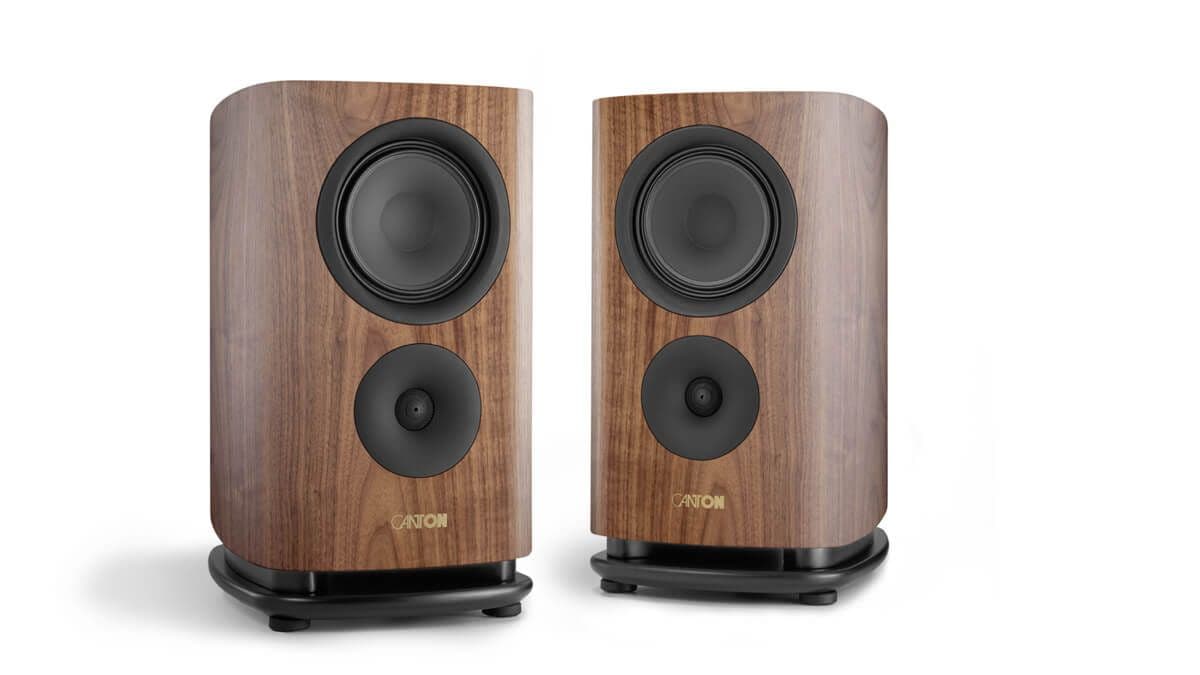
* Canton introduces the Reference 9 GS Edition compact two-way speaker, debuting at the Norddeutsche HiFi-Tage, integrating Reference-Alpha technologies into a…