Get the weekly hi-fi digest — new gear, best reads, and deals.

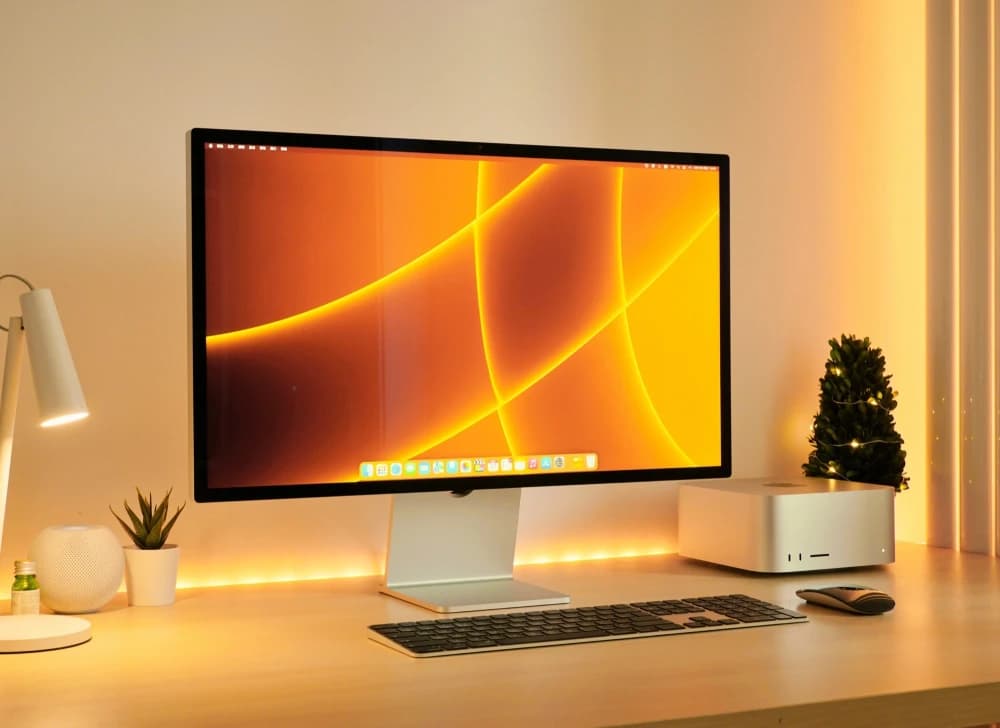
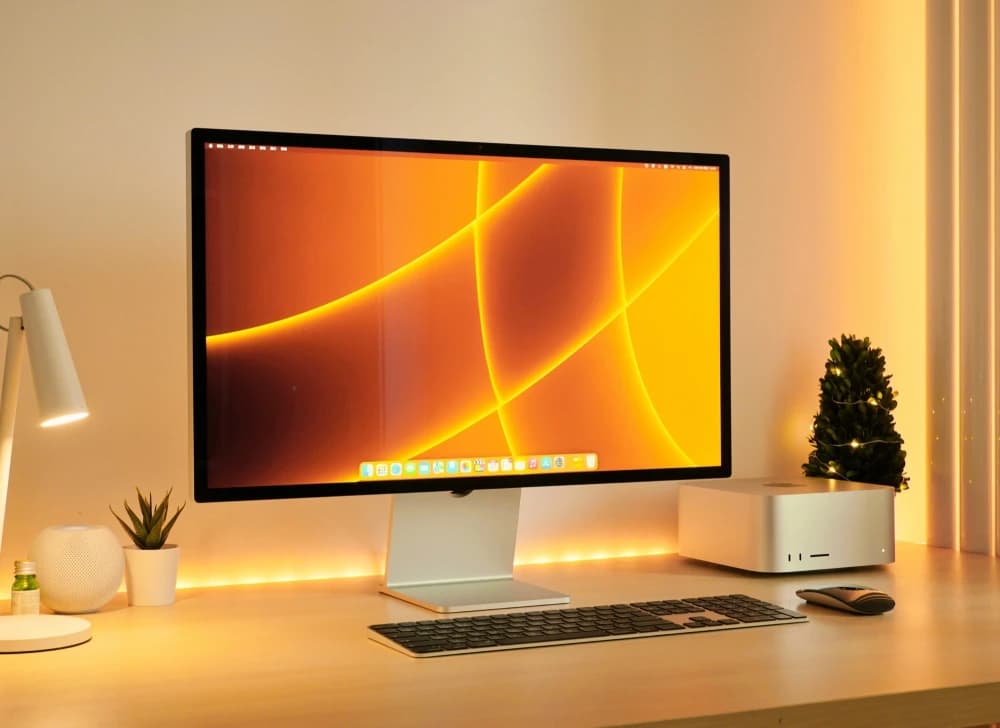
Apple is expected to unveil next-generation Studio Display monitors at an upcoming event, with internal documents suggesting two distinct models are in development.
The two models may include 27-inch and 32-inch versions, or dual 27-inch variants at different price tiers, though Apple has not confirmed sizes.
Both displays are rumored to support ProMotion with variable refresh rates up to 120Hz, significantly upgrading from the current 60Hz Studio Display.
Macworld’s reference to internal documentation hints that Apple is treating the next Studio Display not as a passive panel, but as a self-contained AV node. From an audiophile perspective, the interesting part is not simply “better speakers,” but the likely shift in signal processing philosophy. With a modern Apple silicon inside, the display could handle far more complex DSP chains: linear-phase crossovers, room-adaptive tuning for nearfield desktop use, and tighter synchronization between video timing and audio output. The current Studio Display already leans heavily on computational audio; a more powerful SoC would allow Apple to refine coherence, transient control, and low-level detail—areas where compact, screen-mounted systems traditionally struggle.

The same documents also suggest Apple is positioning at least one variant as a true hub rather than a glorified screen. High-bandwidth I/O implies fewer compromises when routing audio interfaces, external DACs, and high-resolution video through a single cable. For users running active monitors or headphone rigs off a MacBook, this kind of integration matters: lower latency paths, fewer clocking issues, and a cleaner desk topology. It aligns with Apple’s long-standing push to collapse the chain between source and output, reducing variables that can degrade both picture and sound.
What divides opinions in the leaks is not whether Apple can execute this, but why it would. Some analysts see overkill; others read it as a quiet response to professionals who already treat displays as part of the monitoring chain. If Apple follows through, the Studio Display line could blur the boundary between monitor and media engine—less a neutral window, more an actively voiced component in a desktop hi‑fi ecosystem.
Newsletter
Get the week's top trending stories, best deals, and new product launches — straight to your inbox.

* Vertere Acoustics Solo is a dedicated mono moving-coil cartridge engineered specifically for authentic playback of monophonic vinyl recordings with reduced n…

* Tears For Fears’ debut album *The Hurting* (1983) receives an SDE-exclusive Blu-ray Audio reissue, celebrating its 40th anniversary with modern surround remi…

* ABYSS unveiled the Diana TC Signature at CanJam NYC 2026, an ultra-slim open-back planar magnetic headphone engineered for extreme speed, resolution, and sou…

* System Audio’s Legend 60.2 Silverback DS flagship gains 50% more amplifier power via DS platform, retaining identical cabinet while delivering cleaner digita…