Get the weekly hi-fi digest — new gear, best reads, and deals.

ByteDance subsidiary Pico plans to release the Project Swan AR headset in 2026, featuring next-generation micro-OLED displays with an ultra-high 4000 PPI density.
The micro-OLED panels deliver 40 pixels-per-degree average angular resolution and up to 45 PPD peak, surpassing Apple Vision Pro and enabling crisp virtual text rendering.
Project Swan uses a dual-chip architecture, with a main processor offering double the performance of Snapdragon XR2 Gen 2, potentially the unconfirmed XR2 Gen 3.
What makes Project Swan interesting from a hardware purist’s angle is not just raw resolution, but how Pico appears to be tuning the entire optical chain for stability and legibility. High-density micro‑OLED only pays off if paired with optics that keep modulation transfer high across the field, and early disclosures hint that Pico is prioritizing uniform sharpness over aggressive field-of-view chasing. That approach echoes how high-end nearfield monitors trade sheer output for coherence. Compared to Apple’s more closed, vertically integrated philosophy, Pico seems to be betting that display fidelity plus smarter system balancing will matter more to long-session usability than headline specs alone.

The dual-processor layout also signals a more modular performance strategy. Offloading vision and sensor fusion to a dedicated chip reduces jitter in head-locked elements, which is critical when rendering fine UI details or virtual desktops. In audio terms, this is akin to separating DAC and amplifier stages to lower noise and improve transient response. Industry observers note that while Meta has leaned heavily on software-level optimizations to mask hardware limits, Pico is pushing compute separation as a structural solution, potentially resulting in more consistent frame pacing under mixed workloads like spatial multitasking.
On the software side, Pico OS 6 reads less like a fork of mobile VR platforms and more like a spatial operating environment designed for parallelism. Allowing multiple spatial layers to coexist shifts AR from an “app-at-a-time” mindset toward something closer to a desktop DAW session, where tools float and interact. The open WebSpatial framework reinforces this by lowering the barrier for lightweight, browser-based spatial tools—an approach that contrasts with Apple’s tightly curated ecosystem. For developers and power users alike, this openness could be the quiet differentiator that determines whether Project Swan becomes a niche reference device or a daily driver.
Newsletter
Get the week's top trending stories, best deals, and new product launches — straight to your inbox.

Darko Audio
* Roon now integrates nugs.net, requiring a separate subscription, unlocking access to one of the world’s largest archives of official live concert recordings.

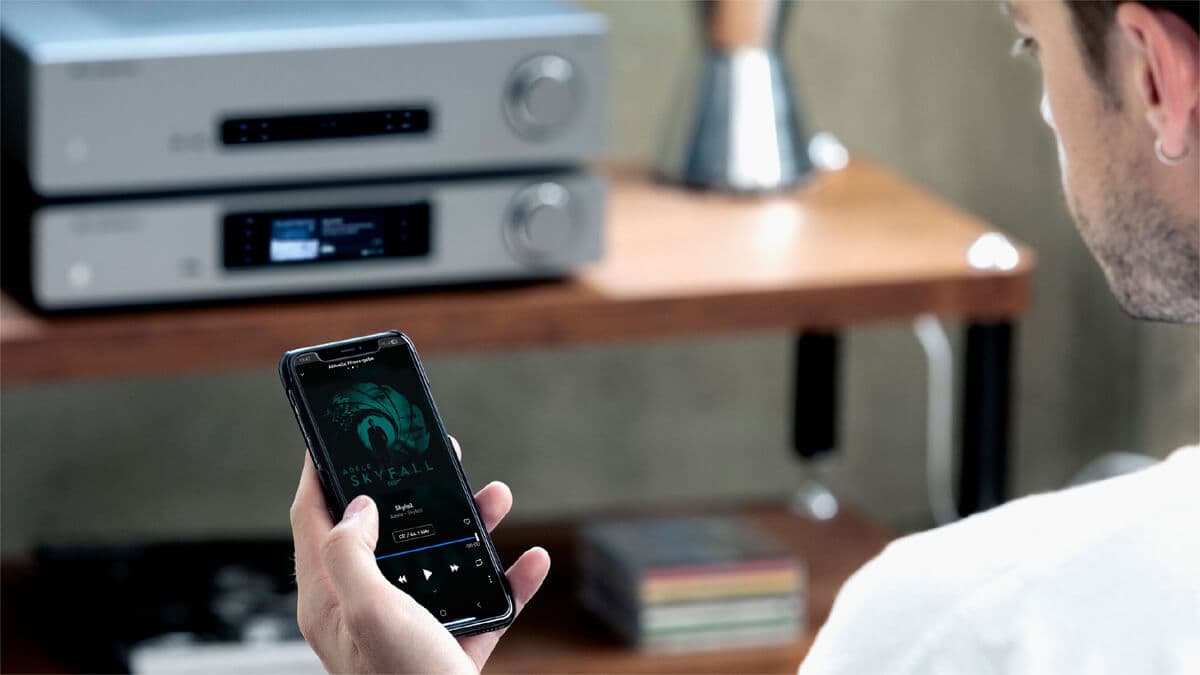
* Cambridge Audio released a free over-the-air firmware update extending Spotify Lossless, Qobuz Connect, and streaming features to StreamMagic devices dating…

* Drop, originally Massdrop founded in 2012, will shut down its standalone e-commerce store, ending its community-driven group-buy and voting-based marketplace…

* ByteDance subsidiary Pico plans to release the Project Swan AR headset in 2026, featuring next-generation micro-OLED displays with an ultra-high 4000 PPI den…