HBO Max to Crack Down on Password Sharing Shortly After Its Germany Launch
By HiFi Editorial28 February 2026
Key Highlights
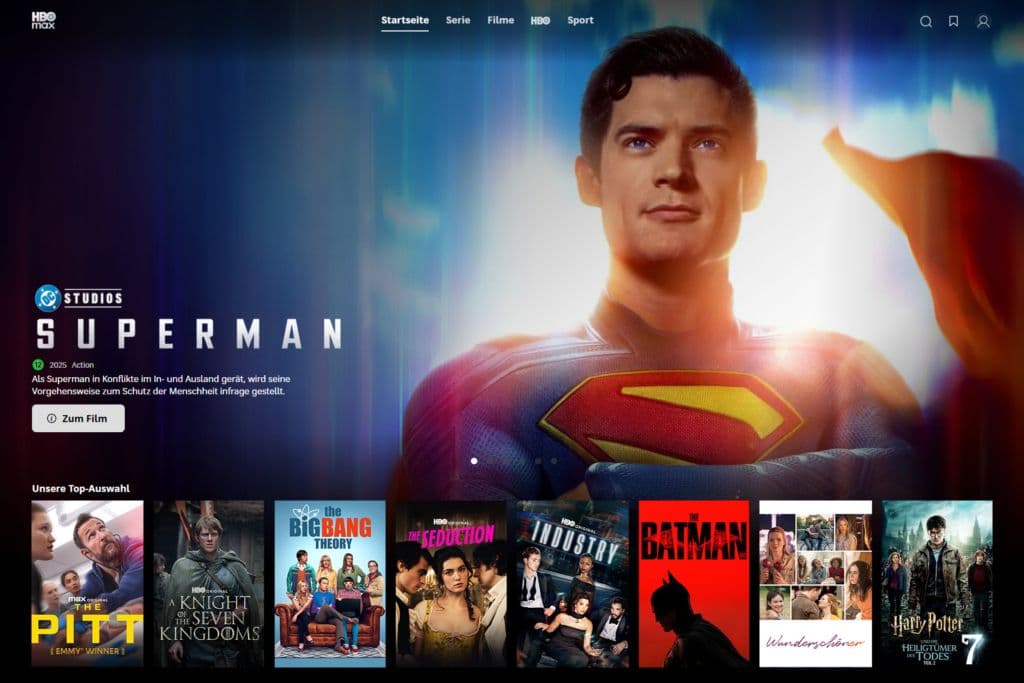
HBO Max launched in Germany in mid-January 2026, offering series like “A Knight of the Seven Kingdoms” and plans starting at €5.99 monthly.
Warner Bros. Discovery plans to restrict password sharing globally in 2026, following Netflix, Disney+, and Paramount+ with paid extra-member models.
In the US, HBO Max already charges $7.99 per additional member, while German pricing for paid account sharing remains unannounced.
From a technical standpoint, the impending clampdown is less about morality and more about signal integrity and entitlement management. Streaming platforms have quietly evolved their DRM stacks into something closer to multi-room audio systems: a “primary endpoint” is defined, and everything else is treated as a satellite zone that needs authorization. Expect HBO Max to lean on IP consistency, device fingerprinting, and session timing rather than blunt geo-blocking. Netflix’s rollout showed that soft checks—periodic re-authentication against a reference network—are more effective than hard locks, because they tolerate mobile viewing while still flagging long-term off-site usage. For users running Apple TV boxes, game consoles, or calibrated Android TV panels, this could surface as brief playback interruptions or silent re-logins rather than explicit error messages.
Financial communications from Warner Bros. Discovery frame the move as yield optimization, but the subtext is bandwidth economics. Every additional concurrent stream hits CDN costs, especially with HDR and Dolby Atmos tracks becoming the default rather than the exception. From an audiophile’s angle, that matters: higher bitrates for lossless-adjacent audio profiles are easier to justify when concurrency is predictable. Disney+ insiders have argued that tightening account access actually stabilizes peak-time quality, reducing aggressive adaptive bitrate drops. HBO Max appears to be steering toward the same philosophy—fewer “ghost listeners,” more headroom for consistent video cadence and cleaner audio floors.
There is also a strategic layer that contrasts with competitors. Netflix positioned paid sharing as a consumer-facing feature, while Paramount+ treated it almost like an enterprise license add-on. Warner Bros. Discovery seems to be threading the needle, embedding enforcement deep in the platform architecture first and worrying about messaging later. If the longer-term platform consolidation materializes, unified account control would be a prerequisite anyway. In that sense, the restriction is less a knee-jerk reaction and more a preparatory re-cabling of the rack before new components are slotted in.
HiFi Weekly Digest
New gear, best reads, and deals — every Friday.