Kiwi Ears Cadenza II Wired IEM Launches With New 10mm Titanium-Coated Dynamic Driver at JPY 8,250
By HiFi Editorial17 February 2026
Key Highlights
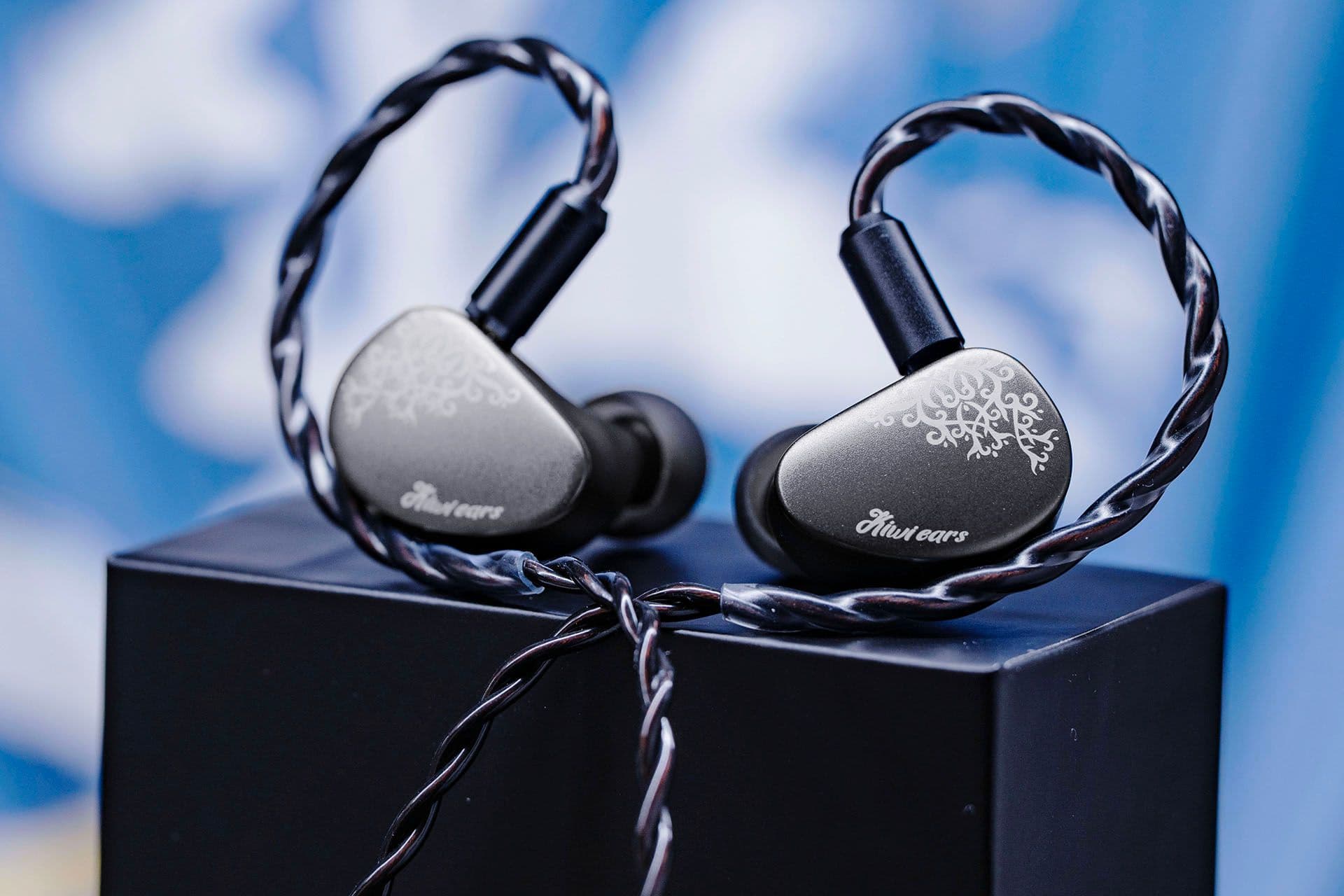
Kiwi Ears Cadenza II wired earphones launch February 20 at ¥8,250, offering blue or gray finishes and a single 10mm dynamic driver design.
New 10mm titanium-coated PET diaphragm delivers fast transient response, clear bass punch, high-resolution treble, and under 1% distortion at 1kHz.
Kiwi Acoustic Resonance System 2.0 uses labyrinthine acoustic tubes to control back pressure, boosting sub-bass by ~8dB while sharply attenuating around 200Hz.
Kiwi Ears’ second-generation Cadenza leans heavily into material science rather than driver count escalation, and that choice shapes its sonic character in telling ways. The titanium-coated PET diaphragm is less about headline stiffness than about controlled modal behavior: the metal layer raises break‑up frequency, while the polymer substrate preserves internal damping. The result, on paper, is faster settling after transients and a cleaner decay profile, which explains why the low end is described less as “boosted” and more as disciplined. Compared with earlier PET-only or LCP implementations at this tier, the emphasis appears to be on minimizing time-domain smear rather than pushing absolute output, an approach that typically favors texture and separation over sheer mass.
The more interesting engineering statement comes from KARS 2.0. Labyrinth-style acoustic tubing is a familiar concept in loudspeaker ports and some high-end IEMs, but its application here suggests a deliberate attempt to decouple sub-bass pressure from the lower midrange. By aggressively damping energy around the upper bass, Kiwi Ears is effectively carving out space for midband clarity without thinning the fundamental weight below. This contrasts with simpler rear-vent tuning strategies that often trade warmth for speed; here, the acoustic network is doing the heavy lifting, allowing a single dynamic driver to behave as if its bass and mids were more independently controlled.
Tonally, the design philosophy diverges from strict diffuse-field or Harman-adjacent targets and instead prioritizes coherence and density through the vocal range. A mild midband bloom can enhance perceived realism in strings and voices, but only if phase alignment and energy transitions remain intact—something the controlled bass shelf and restrained upper treble seem intended to support. The construction choices reinforce this pragmatic focus: a rigid metal faceplate for resonance control paired with a lighter composite shell to manage internal reflections, plus a standard detachable cable interface that keeps the system electrically predictable. In sum, Cadenza II reads less like an exercise in spec-sheet bravado and more like a carefully balanced single-driver platform tuned for musical continuity.
HiFi Weekly Digest
New gear, best reads, and deals — every Friday.