Get the weekly hi-fi digest — new gear, best reads, and deals.

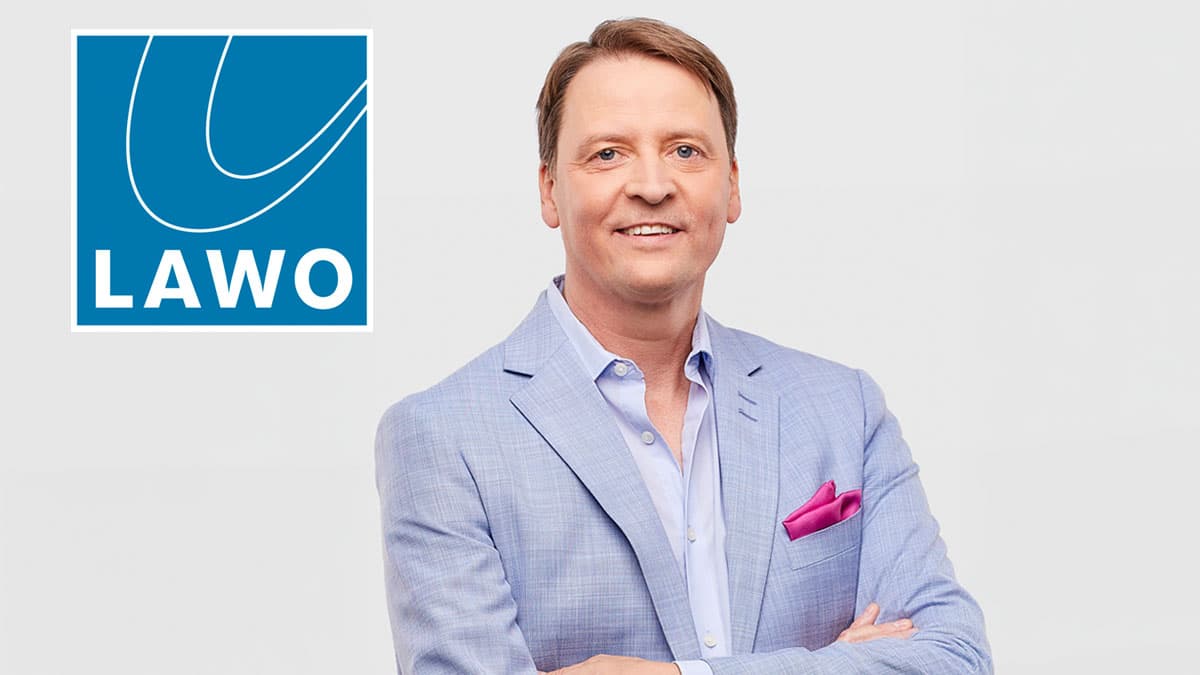
Jamie Dunn is appointed CEO of Lawo AG, succeeding Philipp Lawo, reinforcing leadership continuity and the company’s long-term strategic focus.
Dunn joined Lawo in 2011, previously serving as Head of Global Sales, CCO, and Deputy CEO, bringing over a decade of internal leadership experience.
His career includes roles at Studer for 10+ years, including Studer US Sales Manager at Harman Pro, and four years at LSB Broadcast Technologies.
From a technical vantage point, the leadership shift lands at a moment when Lawo’s engineering DNA is arguably more relevant than ever. The company’s long arc—from digitally controlled analog desks to fully IP-native production platforms—has always been defined by an insistence on deterministic audio transport and clock integrity rather than trend chasing. Where some competitors treat SMPTE ST2110 and AES67 as mere checkboxes, Lawo’s Ravenna-based ecosystem has consistently emphasized low-jitter clocking, predictable latency, and deep integration between control layers and audio processing. Industry observers note that this philosophy aligns more with studio-grade audiophile thinking than with traditional broadcast pragmatism: fewer compromises, tighter timing, and a clear preference for open standards that survive generational shifts in infrastructure.
Different sources frame the current transition less as a change in direction and more as a refinement of execution. One perspective highlights governance and structural clarity, while another implicitly points to the technical continuity embodied by Lawo’s management bench, particularly the presence of a dedicated CTO alongside operations and supply-chain leadership. That balance matters in a market where IP-based audio/video systems are no longer just about moving bits, but about ensuring phase coherence across hundreds of channels, seamless NMOS-based discovery, and hybrid workflows that still respect legacy MADI and baseband requirements. In audiophile terms, this is the difference between a system that merely measures well and one that feels stable, predictable, and sonically trustworthy over years of firmware revisions.
There is also a quieter narrative threading through the coverage: Lawo’s insistence on in-house manufacturing and vertically integrated design in Rastatt. For engineers and purists, this resonates like a well-built reference console—less about scale, more about tolerances, thermal behavior, and long-term serviceability. As live production, broadcast, and immersive formats continue to converge, Lawo’s approach suggests a future where IP infrastructure is treated less like disposable IT hardware and more like core audio equipment, designed with the same seriousness as a mastering-grade signal path.
Newsletter
Get the week's top trending stories, best deals, and new product launches — straight to your inbox.

* Fosi Audio debuted the C3 AI Gaming Sound Card at CanJam NYC 2026, marking its first AI-trained processor targeting competitive FPS gamers seeking precise po…

* Jamie Dunn is appointed CEO of Lawo AG, succeeding Philipp Lawo, reinforcing leadership continuity and the company’s long-term strategic focus.

* Sennheiser will relocate its Americas regional headquarters from Old Lyme, Connecticut, to the Rock Nashville campus, located about 10 minutes from downtown…

T3 Audio
* Leak TruStream combines modern network audio streaming and a high-quality DAC inside a retro-inspired walnut veneer chassis reminiscent of classic 1970s hi-f…