Get the weekly hi-fi digest — new gear, best reads, and deals.

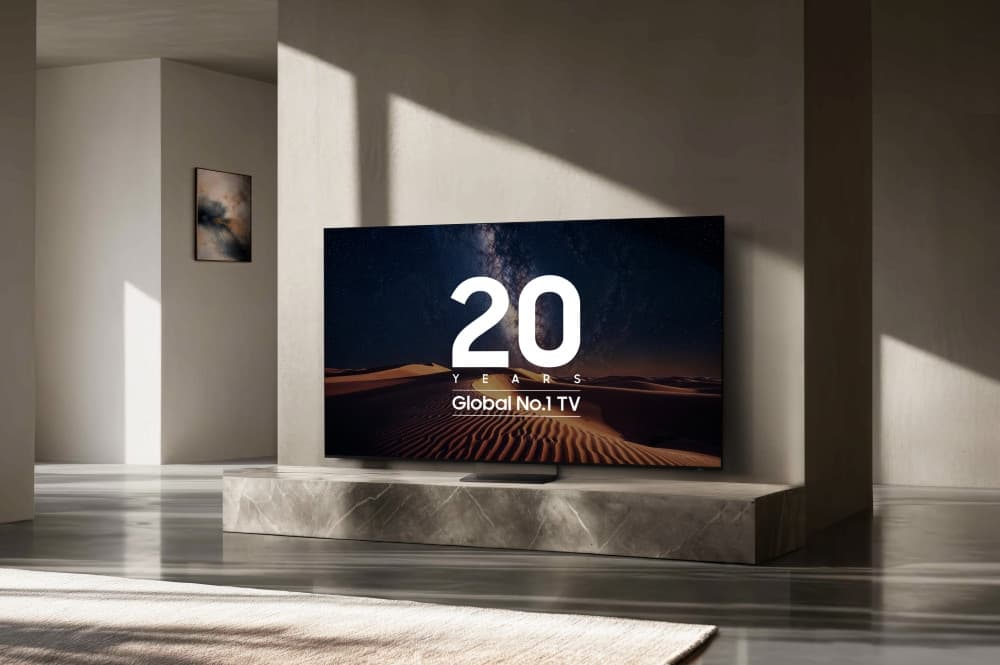
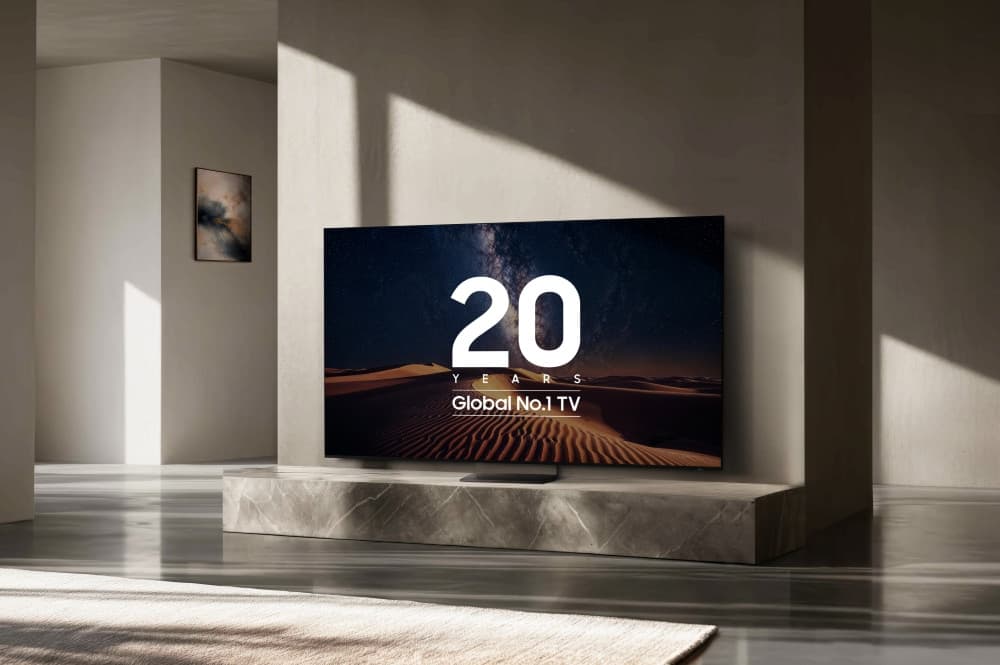
Samsung Electronics marks 20 consecutive years as the world’s leading TV manufacturer, holding top position since 2006 with projected 29.1% global market share by 2025 (Omdia).
The company dominates premium segments, controlling 54.3% of TVs priced above $25,000 and 52.2% of models over $1,500, driven by Neo QLED and OLED lines.
Samsung’s innovation milestones include Bordeaux design TVs (2006), LED adoption for thinner efficiency (2009), and smart TVs transforming displays into entertainment platforms by 2011.
What tends to get lost behind market-share headlines is how Samsung’s engineering priorities have shifted from panel type to system-level optimization. Recent generations of Neo QLED and OLED are less about raw luminance wars and more about control: finer Mini LED zoning, faster response in the dimming algorithm, and tighter synchronization between panel driver and image processor. The company’s latest video pipelines lean heavily on high-bit-depth internal processing, reducing posterization in near-black scenes and stabilizing specular highlights without the aggressive tone clipping that still plagues some competitors. From a signal-chain perspective, Samsung has clearly treated the TV less as a display and more as a full-stack AV component.
Another angle comes from how Samsung balances divergent technologies rather than betting everything on a single horse. OLED addresses contrast purists, while Neo QLED remains attractive for those prioritizing peak brightness, sustained HDR output, and longevity. MICRO LED and Micro RGB sit above both, functioning almost like halo products that trickle down processing advances into mainstream lines. This multi-track strategy contrasts with brands that commit exclusively to OLED or LCD, and it explains why Samsung can iterate faster on SoC design, HDMI bandwidth handling, and multi-format HDR support without being constrained by one panel supplier ecosystem.
From an audiophile’s standpoint, the evolution of onboard audio is equally telling. Samsung’s recent emphasis on object-based decoding and speaker array steering suggests a recognition that visual immersion alone is no longer enough. While built-in speakers will never replace separates, tighter integration between picture analysis and sound placement—dialogue anchoring, dynamic range shaping, and room-adaptive EQ—moves TVs closer to being coherent AV hubs rather than mere screens. This holistic approach, combining panel physics, signal processing, and psychoacoustics, is where Samsung’s long-term technical advantage becomes most apparent.
Newsletter
Get the week's top trending stories, best deals, and new product launches — straight to your inbox.

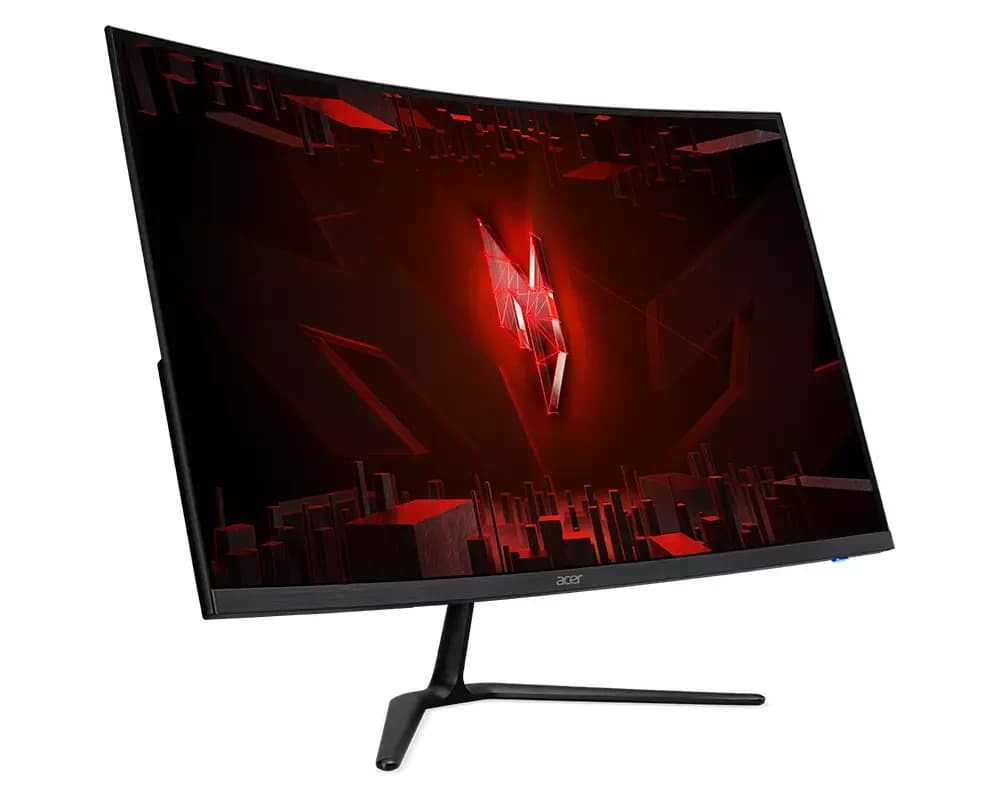
* Acer Nitro ED320QUS3 is a 31.5-inch curved gaming monitor with QHD 2560×1440 resolution, designed for immersive gameplay and versatile everyday productivity.

* Samsung Electronics marks 20 consecutive years as the world’s leading TV manufacturer, holding top position since 2006 with projected 29.1% global market sha…

* Hisense unveiled its 2026 U6 and U7 ULED MiniLED 4K TV lineups, spanning 55–116 inches, targeting midrange buyers seeking large screens and high brightness.

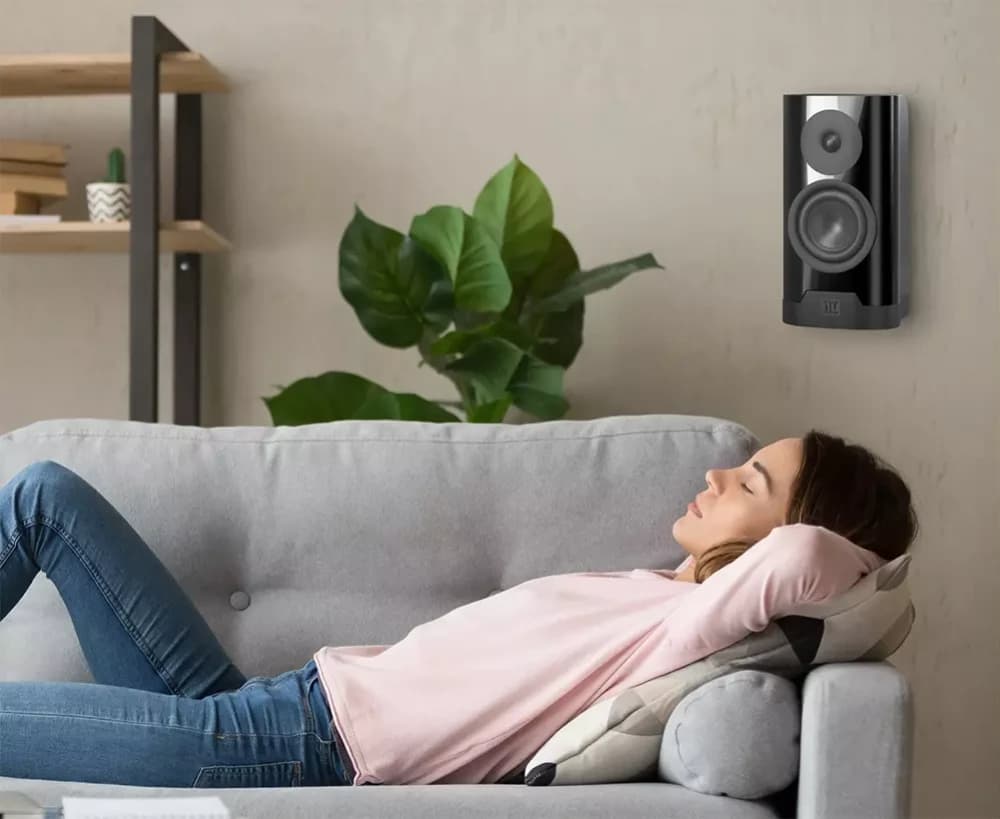
* Nubert nuVero nova 5 is a compact two-way speaker designed for wall, ceiling, and surround use, emphasizing uniform sound dispersion and audiophile performan…