Sonoro STREAMER and Sonoro AMPLIFIER Debut at ISE 2026 as German Multiroom Network Audio Solutions
By HiFi Editorial27 February 2026
Key Highlights
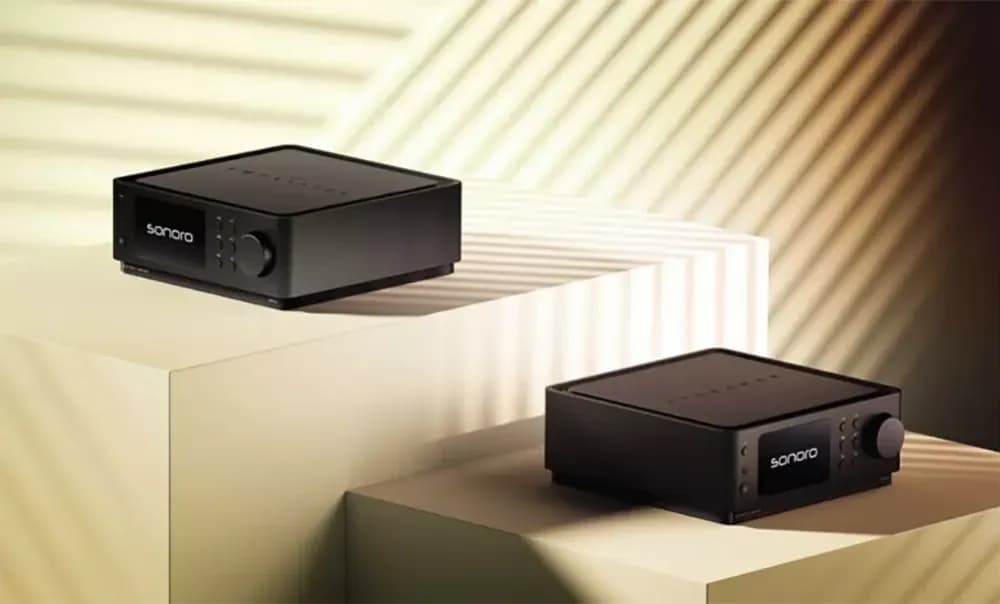
Sonoro audio unveiled STREAMER and AMPLIFIER at ISE 2026 Barcelona, targeting professional multiroom and custom installation markets with reliability, integration simplicity, and high-fidelity sound.
Sonoro STREAMER acts as a network streaming hub featuring ESS SABRE DAC, HDMI eARC, optical S/PDIF I/O, analog inputs/outputs, subwoofer out, USB-A, trigger output, EQ, and bass management.
Sonoro AMPLIFIER combines streaming with a Class D integrated amplifier delivering 2 x 250 W into 4 ohms, ESS SABRE DAC, HDMI ARC, S/PDIF, analog input, sub out, LAN and WLAN.
Seen through an installer’s lens, Sonoro’s new network components feel less like lifestyle streamers and more like infrastructure-grade audio nodes. The choice of ESS SABRE conversion across both models hints at a unified digital platform rather than two loosely related products. What matters here is not the DAC brand itself, but the way Sonoro positions conversion and DSP as a system-level tool: equalization, bass management, and level control are clearly intended to live upstream, reducing dependence on downstream processors or speaker-side tuning. In practice, this makes the STREAMER viable as a true control center for active loudspeakers or multi-channel power amps, rather than just another “digital transport with extras.”
The AMPLIFIER, meanwhile, leans into modern Class D pragmatism. High output figures are only half the story; the more interesting angle is how this power density aligns with in-wall and ceiling speakers that often present complex loads over long cable runs. Combined with network playback and onboard signal conditioning, the amplifier effectively collapses what would traditionally be several rack units into a single chassis. Compared to mainstream consumer streaming amps that prioritize app ecosystems, Sonoro’s approach reads as deliberately conservative: fewer dependencies, predictable behavior, and an emphasis on deterministic signal flow over feature churn.
Perhaps the most telling design decision is the closed, LAN-based multiroom architecture. In contrast to cloud-mediated platforms that trade convenience for long-term uncertainty, Sonoro appears to be betting on Audio-over-IP as a stable backbone for synchronized playback. This places the system closer to professional distributed audio solutions than to consumer multiroom brands, with clear benefits for latency control and commissioning reliability. The inclusion of local displays and direct device interaction reinforces that philosophy: these units are meant to remain intelligible and operable even years after installation, when apps change but racks and wall panels stay exactly where they are.
HiFi Weekly Digest
New gear, best reads, and deals — every Friday.