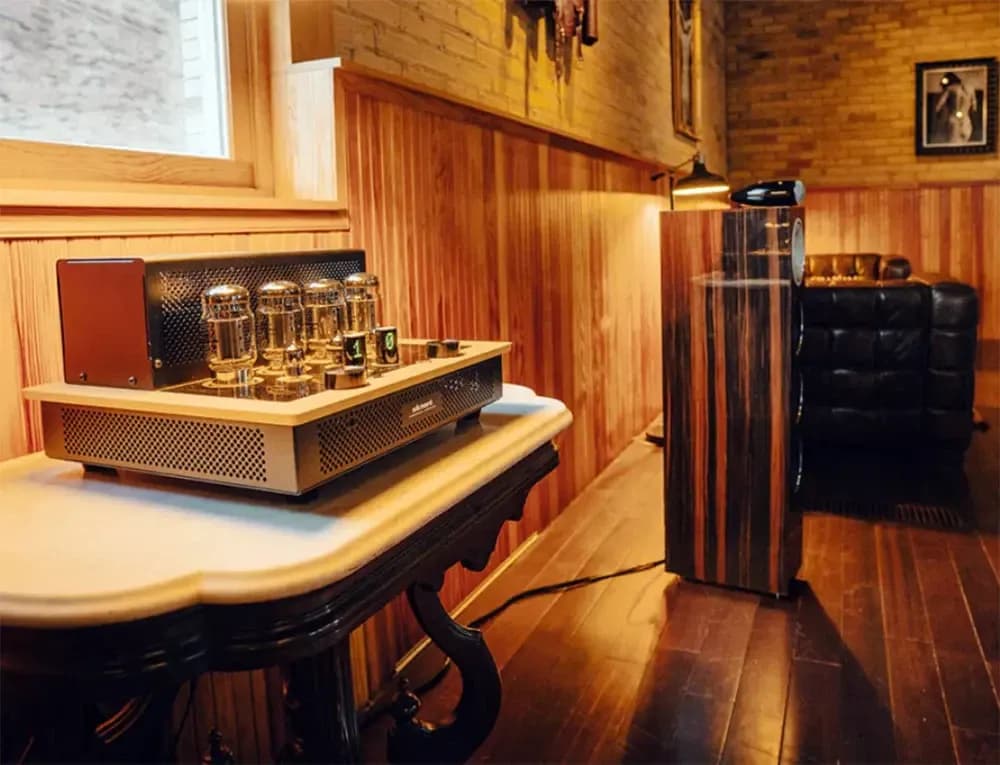
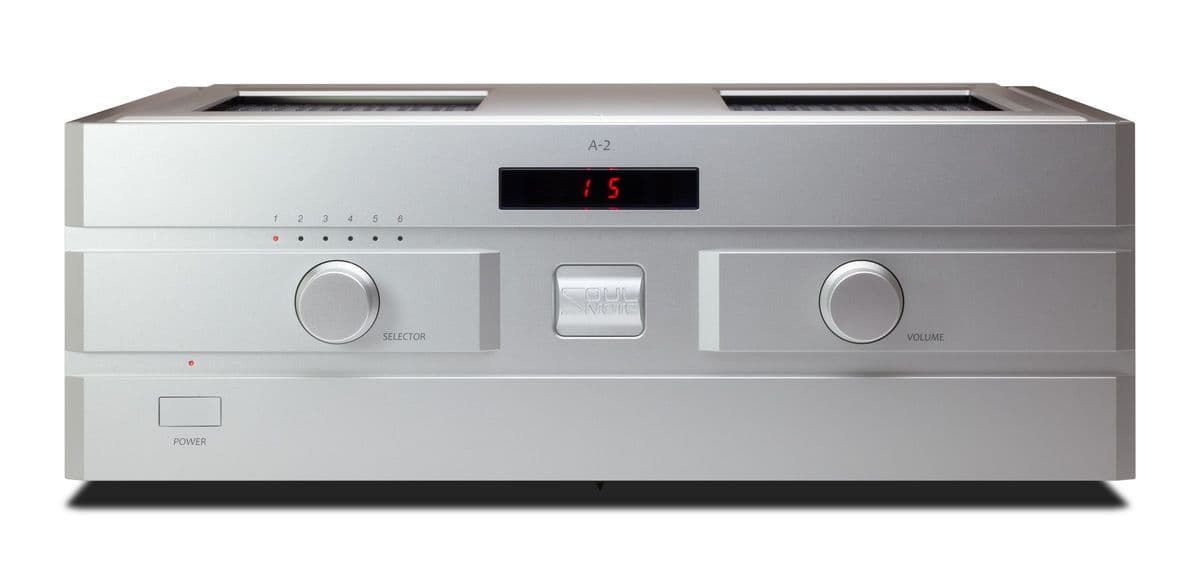
Soulnote A-2 ver. 2 Integrated Amplifier Now Available at Audiopunkt in Warsaw
By HiFi Editorial24 February 2026
Key Highlights
Warsaw-based Audiopunkt announces availability of the integrated amplifier Soulnote A-2 ver. 2, an upgraded Series 2 model informed by advanced Series 3 engineering knowledge.
A-2 ver. 2 features a parallel push-pull output stage using fast TO3P transistors, hFE-matched to reduce distortion common in parallel designs.
The strengthened driver stage also uses TO3P transistors, maintaining high idle current to stabilize hFE variations and deliver significantly improved drive performance.
What differentiates the A-2 ver. 2 in Soulnote’s hierarchy is less about headline features and more about how Series 3 thinking has been miniaturized into a more compact, integrated format. In discussions around the A-3, emphasis was often placed on control under complex loads rather than raw power figures, and that same philosophy clearly trickles down here. The decision to standardize transistor types across stages suggests a conscious effort to keep transfer characteristics predictable across the entire signal path, which in practice tends to preserve timing integrity and microdynamic contrast. Compared with earlier Series 2 designs, the architecture now looks closer to a “single ecosystem” rather than a chain of independently optimized blocks.
Another point of interest is how Soulnote appears to be addressing one of the classic pain points of solid-state amplification: behavior at the edge of thermal and electrical stability. Simplifying the voltage gain and bias network is not just an exercise in elegance; fewer correction loops and shorter paths typically translate into lower phase error and more consistent operating conditions as temperatures fluctuate. In contrast to some high-feedback integrated amplifiers that chase vanishingly low THD figures, this approach aligns more with the Japanese school of maintaining linearity through device behavior rather than correction after the fact. It is a perspective familiar to readers who followed the technical commentary around the A-3, where stability under stress was prioritized over spec-sheet bravado.
From a broader system-matching angle, the internal choices hint at an amplifier voiced for real-world loudspeakers rather than nominal loads. By biasing the design toward current availability and mechanical calmness of the chassis, Soulnote seems to be betting on texture, grip, and spatial coherence as primary virtues. The floating mechanical elements and enclosure refinements, inherited conceptually from higher models, are less about visual flair and more about controlling energy storage and release. In audiophile terms, this usually manifests as cleaner decay, less smearing at higher playback levels, and a presentation that feels unforced—even when the music stops being polite.
HiFi Weekly Digest
New gear, best reads, and deals — every Friday.