Get the weekly hi-fi digest — new gear, best reads, and deals.

Triad Semiconductor introduced the TS5510, a dual-channel universal analog front end (AFE) in a single-chip design simplifying audio input stages while improving real-world performance.
The TS5510 uses a proprietary current conveyor-based architecture delivering 156dB Total Input Capture Range, spanning +28 dBU maximum input to -128 dBU equivalent input noise.
High Common Mode Rejection Ratio exceeding 90dB and strong common-mode voltage tolerance enable robust, noise-free operation in long-cable and electrically noisy environments.
What makes the TS5510 interesting to circuit designers is less the headline numbers and more the architectural pivot away from classic instrumentation‑amp thinking. Traditional mic pre front ends rely on fixed gain blocks with switching networks that inevitably compromise linearity or noise when stretched beyond their comfort zone. Triad’s current‑conveyor approach reframes the problem by treating level translation as a continuously scalable current domain exercise, which better aligns with how modern differential ADC inputs actually behave. From an engineering standpoint, that means fewer “gain cliffs,” less dependence on relay or FET switching, and a signal path that feels more like a wide‑open pipe than a staircase of compromises.

There is also a philosophical contrast between how Triad positions this device and how larger silicon vendors have historically addressed audio. Where mainstream AFEs tend to be repurposed sensor or telecom blocks with audio-friendly tweaks, the TS5510 is clearly voiced from the input connector inward. The emphasis on common‑mode behavior and cable‑borne interference suggests a design brief rooted in real installation scenarios—long runs, unpredictable grounding, and mixed-source rigs—rather than idealized lab conditions. That mindset echoes the background of its product leadership, drawing on decades of console, converter, and interface design rather than generic mixed‑signal playbooks.
From a system integration perspective, the knock‑on effects are significant. Collapsing what used to be multiple analog stages into a tightly controlled front end changes how designers think about front-panel ergonomics, channel density, and even thermal budgeting. Fewer passives in the critical path also mean fewer variables drifting over time, which audiophiles often describe as improved “consistency” rather than a specific sonic trait. If Triad follows through with a family of devices built on the same principles, the TS5510 may end up remembered less as a single clever chip and more as a quiet reset of how universal audio inputs are expected to behave.
New gear, best reads, and deals — every Friday.

* Audio Research I/55 is a compact tube integrated amplifier derived from I/70, succeeding I/50, targeting high-end listeners seeking classic tube sound with m…

* ToxFreeLife tested 81 headphone models from brands including Sony, Apple, JBL, Bose, Samsung, and Temu across European retail and online marketplaces.

* Xiaomi Japan launched the REDMI Buds 8 Pro on February 24, priced around ¥9,980, with an early-bird discount of ¥8,980 until March 9.

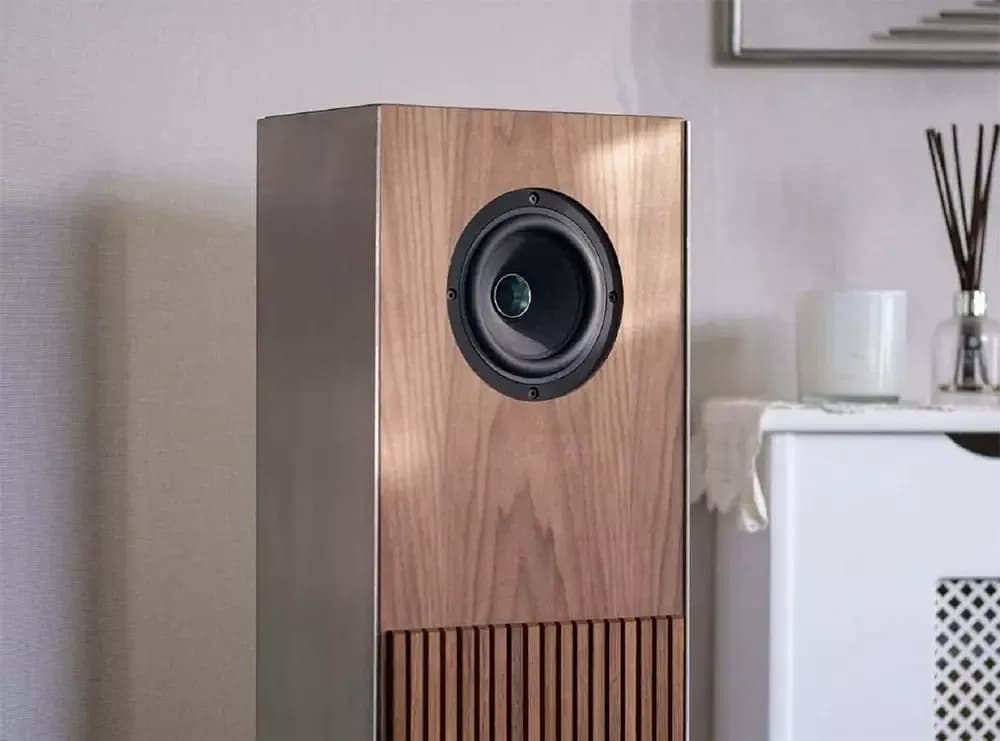
* Lockwood Loudspeakers unveiled the Universal (XP5), a new floorstanding model described as a “modern classic,” blending compact proportions with uncompromisi…