Get the weekly hi-fi digest — new gear, best reads, and deals.

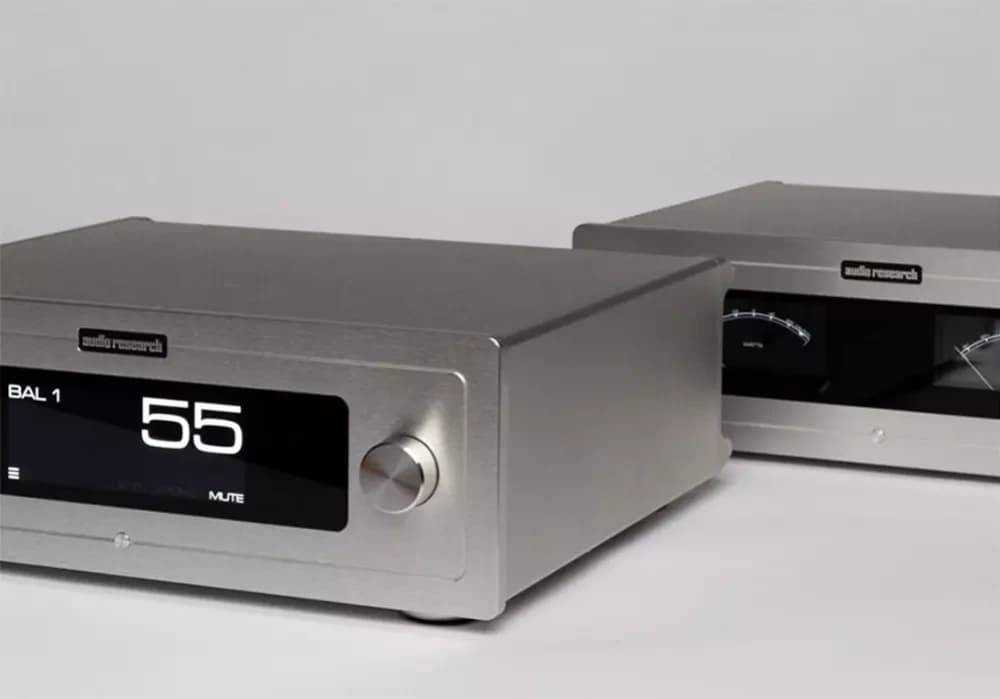
Audio Research LS-3 is a fully balanced, solid-state high-end preamplifier continuing the brand’s legacy, targeting audiophiles seeking uncompromising linear performance without vacuum tubes.
The dual-mono signal path uses separate power supplies and transformers per channel, JFET input stages, bipolar gain devices, and pure Class A output stages.
With 20 dB gain on both balanced and single-ended outputs, plus low output impedance of 10 Ω balanced and 25 Ω unbalanced, LS-3 supports long interconnects.
Audio Research positions the LS‑3 as a statement about signal discipline rather than nostalgia, and that comes through in the way the circuit topology is prioritized over any romantic voicing. The fully differential layout is not just about symmetry on paper; it is used here to minimize common‑mode noise across the entire amplification chain, which becomes especially relevant in systems built around modern digital front ends with high output levels. The choice of JFETs at the input suggests an emphasis on preserving microdynamics and low-level information, while the bipolar devices that follow are tasked with maintaining control and current delivery. This hybrid transistor approach reads like a deliberate attempt to bridge the gap between the textural finesse often associated with tubes and the grip expected from contemporary solid‑state designs.

From an engineering standpoint, the strict dual‑mono implementation is arguably the most telling design decision. Separate transformers and regulation per channel are expensive and space‑consuming, but they directly address inter-channel modulation and power-supply-induced blur—issues that tend to surface when driving demanding power amplifiers. Compared to simpler shared-supply preamps in the same category, this architecture is better suited for complex musical passages where transient density and spatial stability can easily collapse. In that sense, the LS‑3 appears less concerned with headline features and more focused on behaving as an electrically inert control center, something seasoned audiophiles often describe as “getting out of the way” of the signal.
The industrial design and interface choices reinforce this modernist direction. The touch-based control system replaces rows of mechanical switches without turning the preamplifier into a lifestyle device, maintaining a restrained visual language that long-time Audio Research users will recognize. More importantly, it reflects a broader shift within high-end audio toward adaptability: the LS‑3 is clearly intended to anchor systems that evolve over time, whether through changing sources or system layouts. Rather than chasing euphonic coloration, Audio Research seems intent on offering a neutral, technically rigorous platform—one that treats the preamplifier not as a flavoring stage, but as a precision instrument at the heart of the system.
Newsletter
Get the week's top trending stories, best deals, and new product launches — straight to your inbox.

* Acer Nitro ED320QUS3 is a 31.5-inch curved gaming monitor with QHD 2560×1440 resolution, designed for immersive gameplay and versatile everyday productivity.

* Samsung Electronics marks 20 consecutive years as the world’s leading TV manufacturer, holding top position since 2006 with projected 29.1% global market sha…

* Hisense unveiled its 2026 U6 and U7 ULED MiniLED 4K TV lineups, spanning 55–116 inches, targeting midrange buyers seeking large screens and high brightness.

* Nubert nuVero nova 5 is a compact two-way speaker designed for wall, ceiling, and surround use, emphasizing uniform sound dispersion and audiophile performan…