Get the weekly hi-fi digest — new gear, best reads, and deals.

3GPP Release 19 introduces Immersive Voice and Audio Services (IVAS), extending EVS with a new codec supporting stereo, multichannel, object-based, and scene-based audio at low bitrates.
IVAS integrates rendering and immersive processing into standardized mobile services, enabling format-appropriate playback across headphones, stereo speakers, multichannel systems, and XR devices.
Supported IVAS representations include EVS-compatible mono, binaural stereo, multichannel, object-based ISM, SBA/Ambisonics, MASA, and combined OMASA/OSBA modes with up to four audio objects.
What makes IVAS genuinely disruptive is not just the codec extension itself, but the architectural decision to fuse transport, spatial metadata, and rendering intent into a single, standardized signal chain. Unlike legacy voice codecs that treat spatialization as an afterthought, IVAS assumes the playback endpoint is an active participant, dynamically adapting the scene to headphones, nearfield speakers, or full surround layouts. From an audiophile standpoint, this shifts the bottleneck away from raw bitrate and toward how cleanly a device preserves phase integrity, micro‑dynamics, and localization cues as audio moves from capture through rendering. The inclusion of scene-based and object-assisted modes effectively borrows from cinema-grade workflows, yet constrains them to telecom-grade latency budgets—an unusual marriage of studio logic and mobile pragmatism.
Different stakeholders frame IVAS from contrasting angles. Network and chipset vendors emphasize efficiency and backward continuity with established voice pipelines, while audio engineers tend to fixate on perceptual stability: does the phantom center wander, does ambience collapse under motion, does timbre smear when objects are re-rendered on the fly? IVAS implicitly acknowledges these concerns by formalizing spatial descriptors such as interaural timing, level relationships, and reverberant energy as first-class citizens of the bitstream rather than vendor-specific tricks. In practice, this means microphone array geometry, DSP headroom, and renderer precision now matter as much as encoder performance—particularly on compact devices where physical constraints fight against believable soundstage reproduction.
Seen through a hi‑fi lens, IVAS is less about louder features and more about discipline. By defining how immersive elements should survive translation across wildly different playback chains, the standard pushes manufacturers toward consistency rather than spectacle. The real differentiator will not be who supports the most modes on paper, but whose implementation maintains coherent imaging, stable depth, and tonal balance when the scene becomes complex. For listeners accustomed to scrutinizing soundstage width or transient snap, IVAS quietly raises expectations for mobile audio—bringing spatial honesty into places once dominated by flat, utility-grade voice.
Newsletter
Get the week's top trending stories, best deals, and new product launches — straight to your inbox.

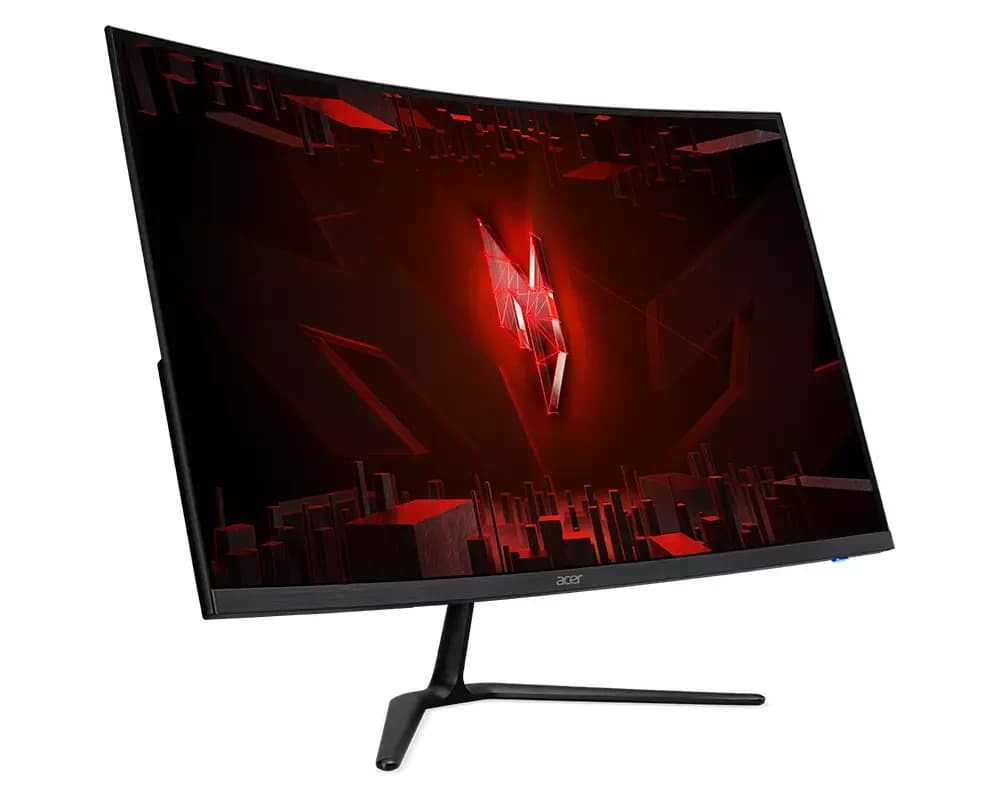
* Acer Nitro ED320QUS3 is a 31.5-inch curved gaming monitor with QHD 2560×1440 resolution, designed for immersive gameplay and versatile everyday productivity.

* Samsung Electronics marks 20 consecutive years as the world’s leading TV manufacturer, holding top position since 2006 with projected 29.1% global market sha…

* Hisense unveiled its 2026 U6 and U7 ULED MiniLED 4K TV lineups, spanning 55–116 inches, targeting midrange buyers seeking large screens and high brightness.

* Nubert nuVero nova 5 is a compact two-way speaker designed for wall, ceiling, and surround use, emphasizing uniform sound dispersion and audiophile performan…