JBL L100 Classic 80 Limited Edition Speakers with Oak Real Wood Finish Celebrate JBL’s 80th Anniversary
By HiFi Editorial25 February 2026
Key Highlights
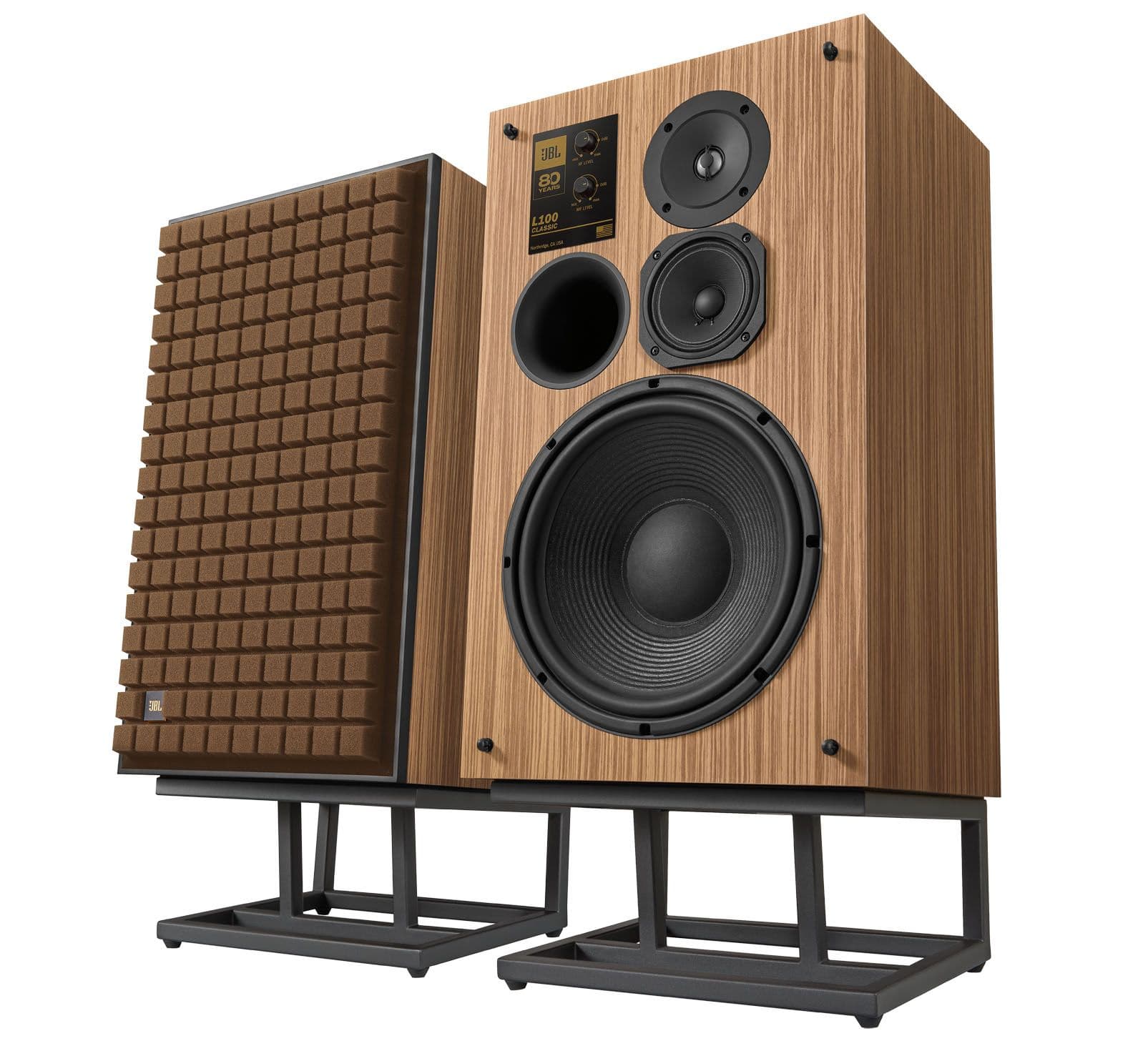
JBL L100 Classic 80 commemorates JBL’s 80th anniversary, based on the L100 Classic Mk2, with full six-sided oak real-wood veneer cabinetry.
Strictly limited to 800 pairs worldwide and just 20 pairs in Japan, each set includes a serialized plaque signed by chief system engineer Chris Hagen.
Design highlights include a wood-finished front baffle, brown Quadrex foam grille with gold-and-black JBL logo, and a satin-black framed wooden grille.
What distinguishes this anniversary variant at a technical level is less about driver swaps and more about how familiar hardware is reframed acoustically. Moving the wood finish onto the front baffle is not just cosmetic; it subtly alters the mechanical impedance of the baffle surface compared with the standard painted substrate. In practice, that tends to shift high‑frequency diffraction behavior and can slightly soften edge reflections around the tweeter and midrange apertures. Forum discussions around classic JBL designs often note that these speakers walk a fine line between studio-monitor immediacy and domestic warmth, and the all-wood exterior leans the presentation a touch toward the latter without abandoning the forward, dynamic character the L100 lineage is known for.
The underlying architecture remains faithful to the Mk2 platform, which itself refined the crossover topology and driver integration compared with the earlier Classic. The titanium dome’s extended bandwidth allows the upper crossover point to stay comfortably out of the most sensitive vocal range, reducing intermodulation with the midrange cone. Meanwhile, the large-format woofer continues to prioritize transient punch over ultra-deep extension, a tuning choice that aligns with the speaker’s historical roots in control-room monitoring rather than modern subwoofer-assisted systems. The inclusion of dedicated stands is also more than a packaging gesture: elevating the cabinet to the intended listening axis and decoupling it from the floor helps preserve the designed power response, something enthusiasts often struggle to replicate with generic furniture.
From a broader perspective, sources frame this model as a celebration piece rather than a technical revolution, yet that framing undersells the cumulative effect of its refinements. By locking the system into matched pairs and controlling every physical interface—from cabinet finish to support hardware—JBL effectively removes variables that typically separate showroom sound from in-room reality. For collectors and long-time JBL listeners, the appeal lies in hearing a very familiar voicing presented with tighter tolerances and a slightly more organic tonal envelope, rather than chasing a new sonic signature altogether.
HiFi Weekly Digest
New gear, best reads, and deals — every Friday.