Get the weekly hi-fi digest — new gear, best reads, and deals.

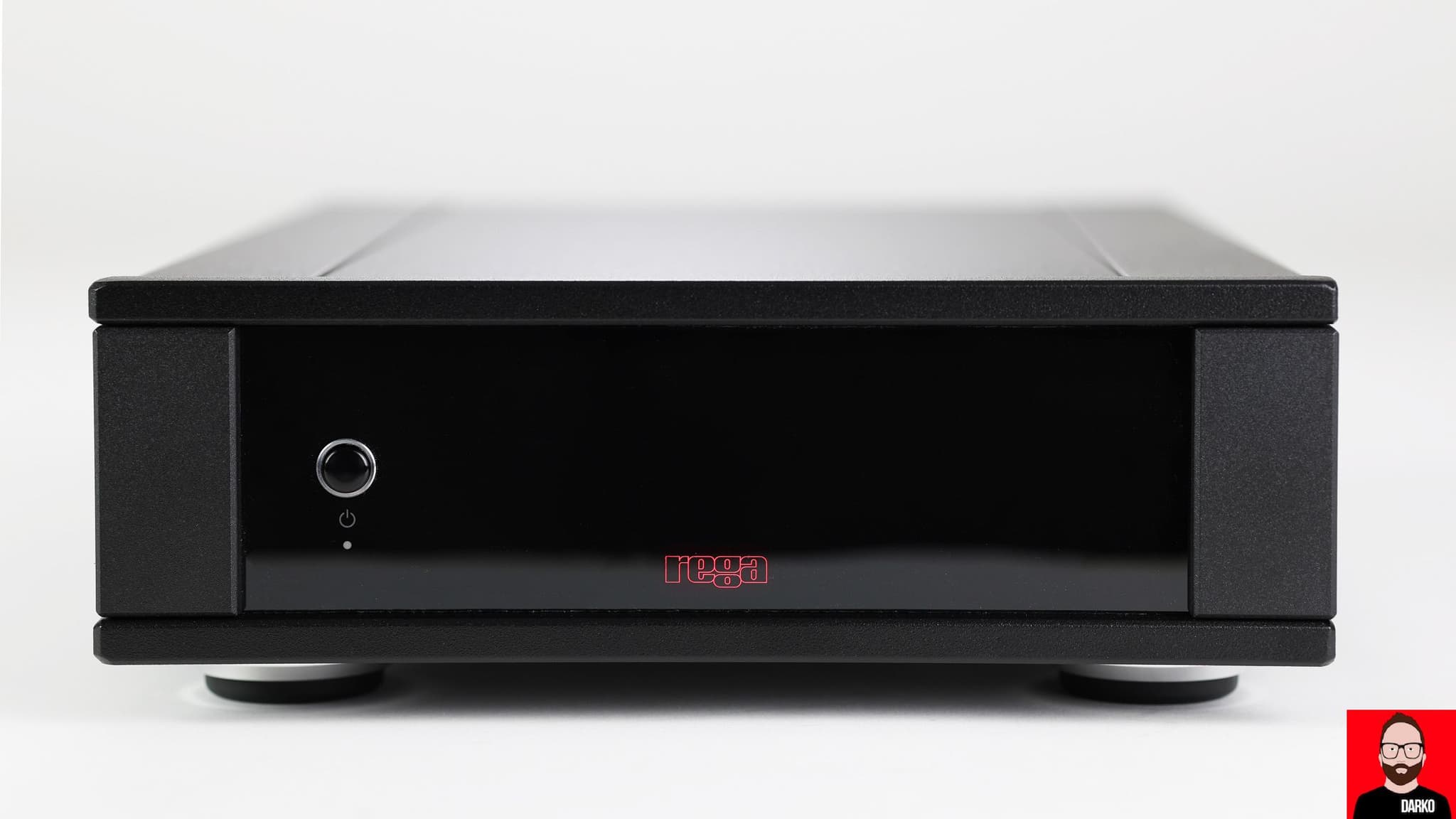
Rega AOS MC phono stage borrows heavily from reference Aura MC, delivering a two-stage, pure-analogue moving-coil design without any digital control circuitry.
Circuit uses parallel low-noise FET compound pairs drawing zero cartridge bias current, preserving MC magnetic geometry, with a self-adjusting servo compensating ambient and temperature drift.
Rear-panel DIP switches enable resistance loading from 70Ω–400Ω, capacitance 1000–4300pF, plus a 6dB gain toggle for low-output MC cartridges.
Rega’s decision to distil the Aura’s core topology into the AOS MC reads less like cost-cutting and more like boundary-setting. The compound FET front end, inherited almost wholesale, points to a belief that the first gain device defines a phono stage’s character more than downstream embellishments. By avoiding bipolar input devices and their associated bias currents, Rega is effectively prioritising cartridge behaviour over circuit convenience, an approach often discussed in audiophile circles when MC stages are accused of “gripping” a cartridge too tightly. The inclusion of a servo to manage drift rather than brute-force regulation suggests a bias toward long-term operating stability without inserting additional active elements directly into the signal path.

Where opinions diverge across coverage is on adjustability. Some sources frame the rear-panel switching as deliberately conservative, implying Rega expects users to match by ear within a known window rather than chase infinite granularity. That stance aligns with the company’s historical resistance to front-panel controls and displays, and contrasts with rivals that treat loading as a tuning playground. The AOS MC’s choices hint at a belief that excessive configurability can mask underlying circuit noise or gain-structure issues, whereas a tightly defined operating envelope forces the design to stand on its fundamentals.
Positioned between Rega’s entry MC stage and its reference unit, the AOS MC appears less about filling a price gap and more about offering the Aura’s design logic in a physically and electrically simpler form. The absence of balanced connectivity, often debated online, can be read as a pragmatic acknowledgment of real-world tonearm wiring rather than a technical omission. In that sense, the AOS MC feels engineered for systems where signal purity and grounding discipline matter more than feature checklists—a phono stage that reflects Rega’s long-held view that fewer decisions in the signal path often lead to fewer problems downstream.
New gear, best reads, and deals — every Friday.

* Audio Research I/55 is a compact tube integrated amplifier derived from I/70, succeeding I/50, targeting high-end listeners seeking classic tube sound with m…

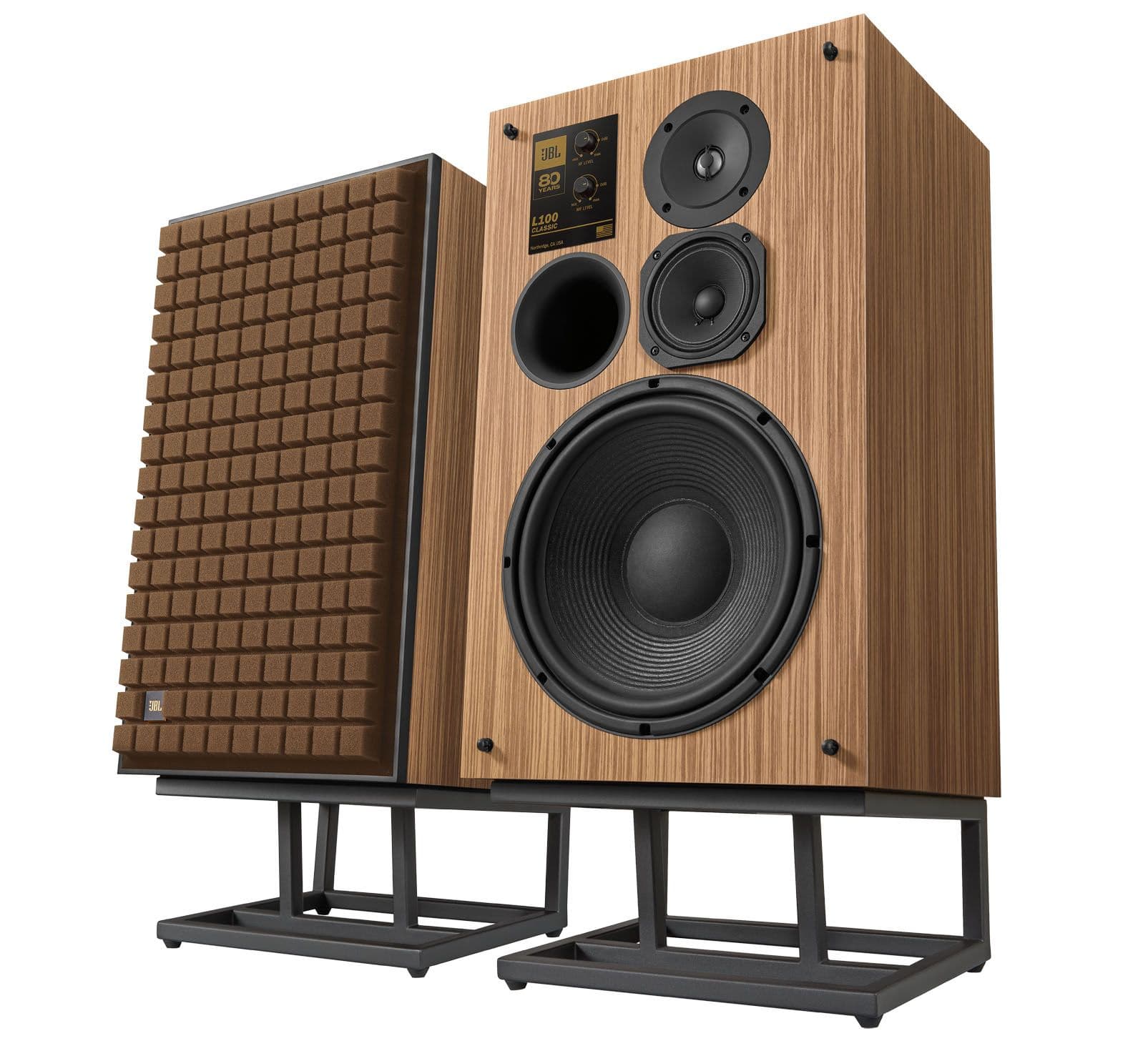
* JBL L100 Classic 80 commemorates JBL’s 80th anniversary, based on the L100 Classic Mk2, with full six-sided oak real-wood veneer cabinetry.

* Xiaomi Japan launched the REDMI Buds 8 Pro on February 24, priced around ¥9,980, with an early-bird discount of ¥8,980 until March 9.

HiFi.De
* ToxFreeLife tested 81 headphone models from brands including Sony, Apple, JBL, Bose, Samsung, and Temu across European retail and online marketplaces.