Get the weekly hi-fi digest — new gear, best reads, and deals.

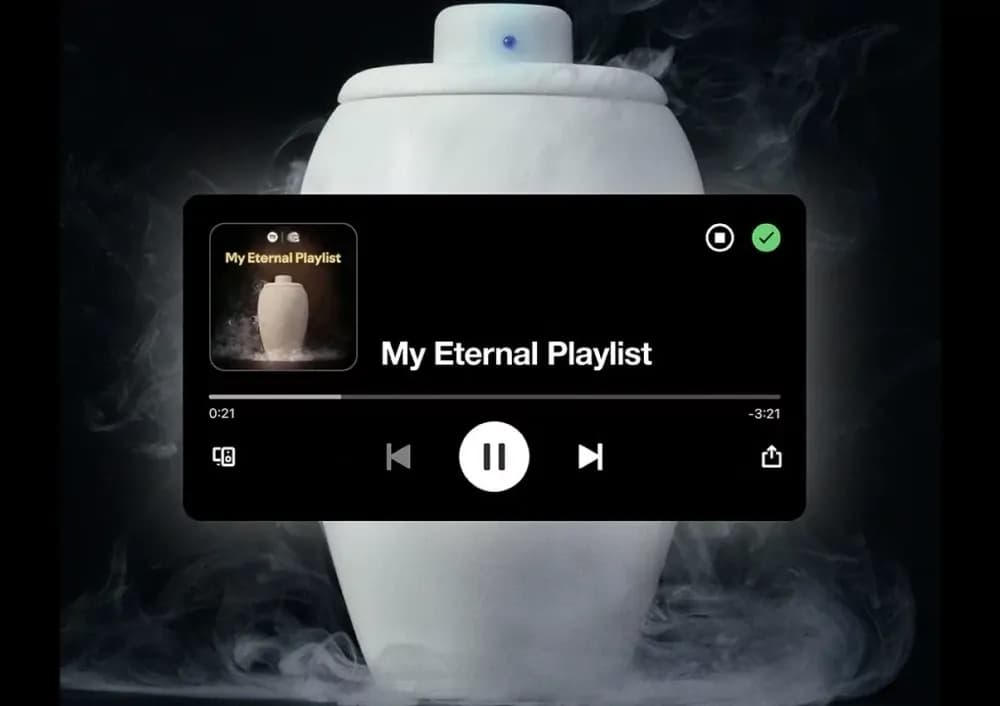
Spotify and Liquid Death unveiled the Eternal Playlist Urn, a portable Bluetooth speaker designed as a cremation urn, blending audio hardware with provocative memorial aesthetics.
The device will be sold exclusively in the United States in a limited run of 150 units, priced at $495 each, emphasizing scarcity and collectible appeal.
Buyers can generate a personalized “Eternal Playlist” by answering creative prompts, with Spotify’s system augmenting responses using individual listening history data.
From a hardware standpoint, the Eternal Playlist Urn reads less like a conventional portable speaker and more like a concept object built around software orchestration. The absence of published specifications—no wattage, driver configuration, codec support, or battery capacity—implicitly shifts attention away from acoustic performance metrics and toward system integration. Given Spotify’s prior hardware collaborations, the expectation among technically minded listeners is a modest full‑range driver tuned for near‑field listening rather than high-SPL output. This places the device closer to lifestyle Bluetooth speakers than to anything approaching reference-grade portable audio, especially considering the acoustic compromises imposed by an urn-shaped enclosure with limited internal volume and unknown damping strategy.
Comparatively, Spotify’s earlier IKEA-branded speakers leaned on predictable DSP tuning and network reliability rather than audiophile transparency, while the Car Thing accessory prioritized interface latency and streaming stability over sound reproduction entirely. The Eternal Playlist Urn appears to continue this trajectory: hardware as a conduit for Spotify’s recommendation engine rather than as an endpoint for critical listening. The technically interesting element is not the speaker topology but the playlist-generation pipeline, which effectively treats long-term user data as a form of metadata baked into the playback experience. In audiophile terms, this is personalization at the software layer, not via EQ curves or room correction, but through content selection tightly coupled to the playback device.
Seen through a hi‑fi lens, the product raises questions about longevity and support rather than frequency response or Bluetooth revision. With Spotify’s mixed track record in sustaining niche hardware platforms, the urn functions more like a closed ecosystem artifact than a future-proof audio component. For enthusiasts accustomed to modular systems and spec transparency, this approach contrasts sharply with traditional hi‑fi values—yet it underscores a broader shift where the “signal chain” increasingly begins with algorithms, not amplifiers.
New gear, best reads, and deals — every Friday.

* Audio Research I/55 is a compact tube integrated amplifier derived from I/70, succeeding I/50, targeting high-end listeners seeking classic tube sound with m…

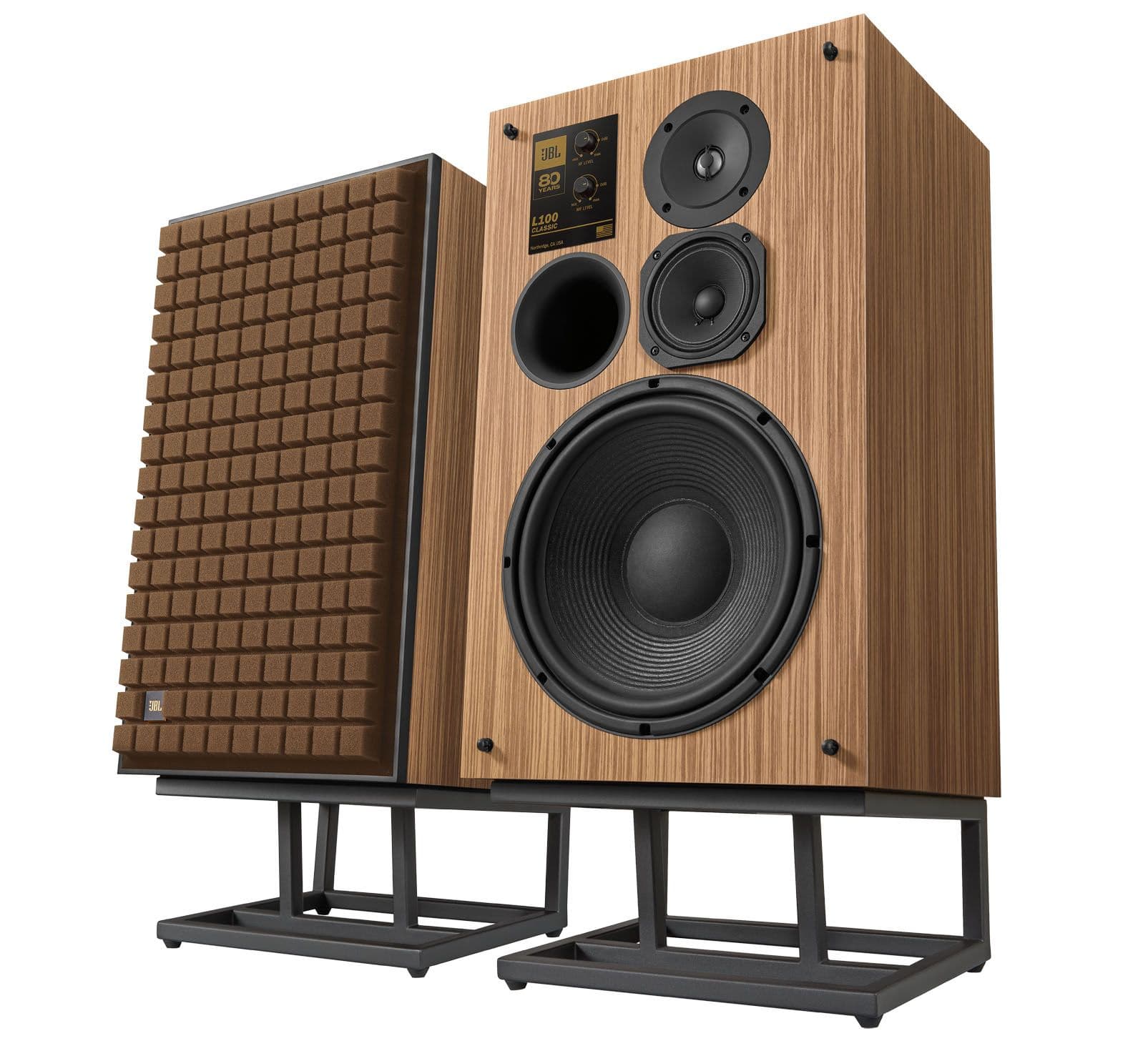
* JBL L100 Classic 80 commemorates JBL’s 80th anniversary, based on the L100 Classic Mk2, with full six-sided oak real-wood veneer cabinetry.

* Xiaomi Japan launched the REDMI Buds 8 Pro on February 24, priced around ¥9,980, with an early-bird discount of ¥8,980 until March 9.

HiFi.De
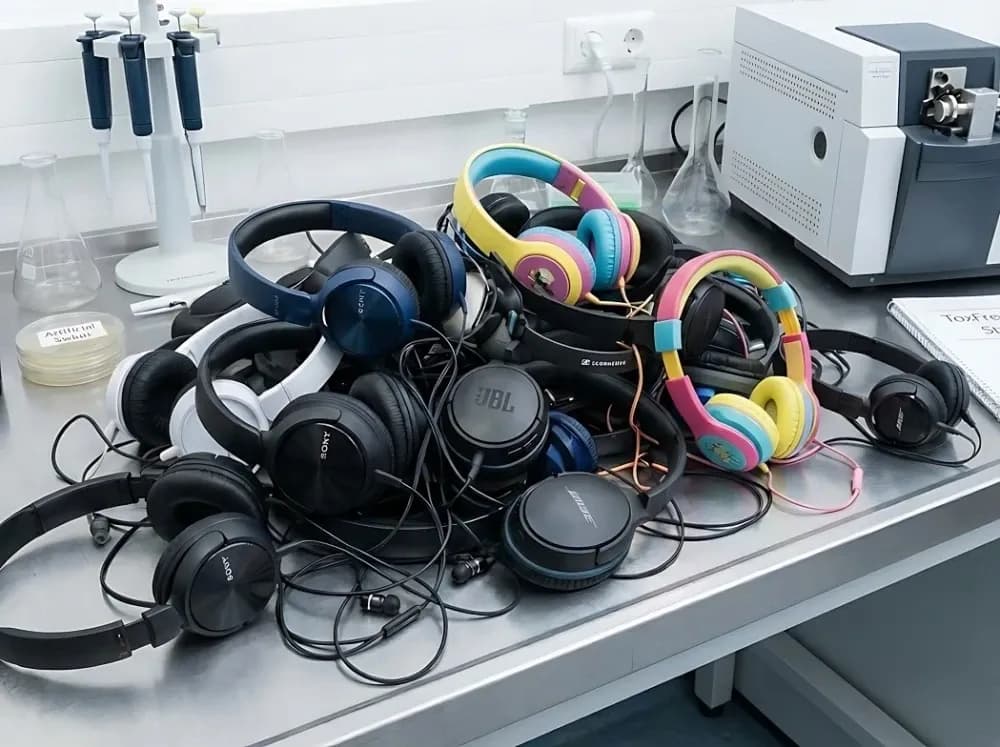
* ToxFreeLife tested 81 headphone models from brands including Sony, Apple, JBL, Bose, Samsung, and Temu across European retail and online marketplaces.