Get the weekly hi-fi digest — new gear, best reads, and deals.

Spotify is developing a feature allowing users to directly influence recommendations by typing notes or comments that shape the Home screen algorithm.
Code found in Spotify app version 9.1.28.385 suggests users can specify preferred genres or artists, addressing limitations of passive listening-based taste profiles.
Currently, Spotify’s algorithm relies on listening history and exclusion options, but cannot actively highlight music users explicitly want recommended.
From a signal-processing perspective, Spotify’s recommendation stack has long leaned on implicit feedback: skips, repeats, dwell time, playlist adds. That works well for smoothing long‑term taste vectors, but it notoriously struggles with context drift—think late‑night critical listening versus background playback on a Bluetooth speaker at a gathering. What the surfaced code hints at is a shift toward explicit, supervised input layered on top of existing embeddings. In technical terms, this could act as a high‑priority weighting factor in the Home screen’s ranking stage, temporarily overriding collaborative filtering with user-declared intent. For audiophiles, that’s significant: it suggests the algorithm may finally distinguish between “often played” and “currently desired,” a nuance as important as separating mastering quality from musical preference.

There’s also an architectural implication. Allowing editable user notes implies Spotify is treating these inputs as mutable parameters rather than permanent profile anchors. That aligns with modern recommender design, where short‑lived preference vectors sit alongside stable long‑term taste models. Compared to the current binary tools—hide, exclude, or skip—this introduces a gradient control, closer to telling a DSP how aggressively to apply a filter rather than simply turning it on or off. Android Authority’s code findings point in this direction, suggesting Spotify is experimenting with more transparent preference injection instead of the black‑box mystique that has frustrated power users for years.
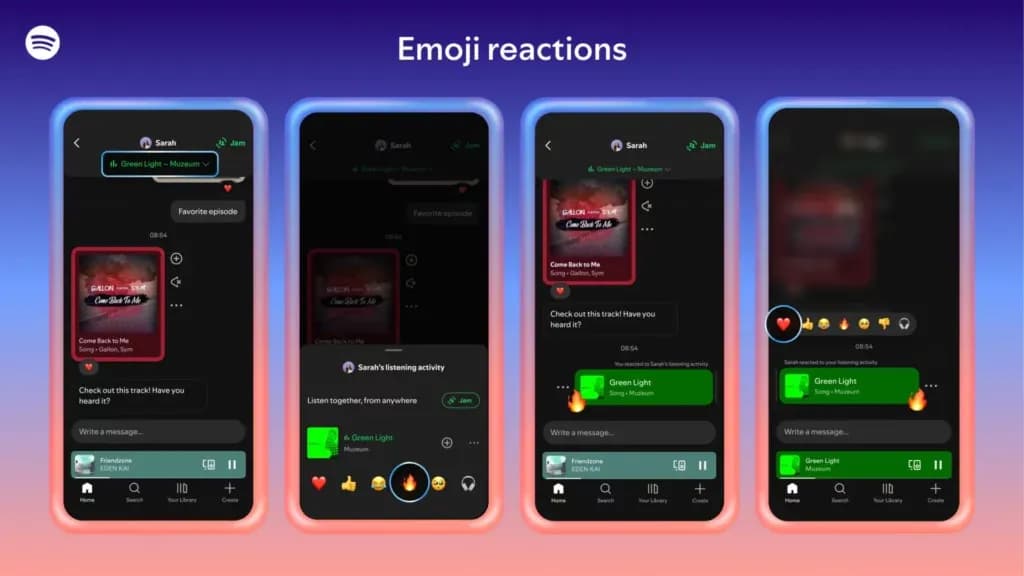
The parallel work on richer emoji reactions may seem cosmetic, but it fits the same pattern: denser, more expressive feedback channels. While emojis won’t tune frequency response or dynamic range, they do provide lightweight sentiment signals that can be parsed far faster than traditional engagement metrics. Taken together, these changes suggest Spotify is rethinking how user intent is captured—less like passive room correction, more like actively dialing in a system. For listeners who obsess over control, that philosophical shift matters almost as much as any codec or bitrate debate.
New gear, best reads, and deals — every Friday.

* Audio Research I/55 is a compact tube integrated amplifier derived from I/70, succeeding I/50, targeting high-end listeners seeking classic tube sound with m…

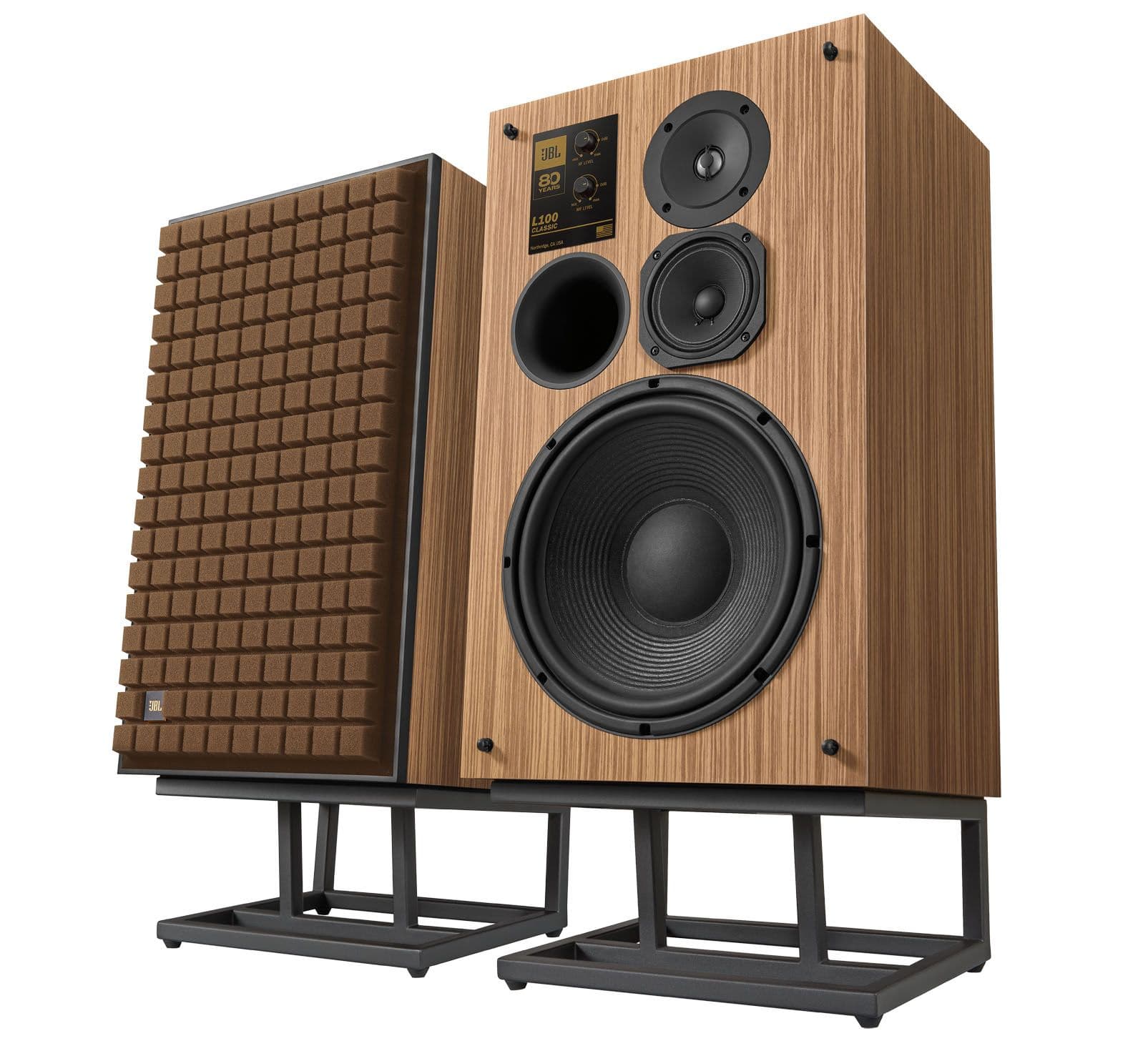
* JBL L100 Classic 80 commemorates JBL’s 80th anniversary, based on the L100 Classic Mk2, with full six-sided oak real-wood veneer cabinetry.

* Xiaomi Japan launched the REDMI Buds 8 Pro on February 24, priced around ¥9,980, with an early-bird discount of ¥8,980 until March 9.

HiFi.De
* ToxFreeLife tested 81 headphone models from brands including Sony, Apple, JBL, Bose, Samsung, and Temu across European retail and online marketplaces.